Carlo Maria Mariani at Villa Farnesina. The Essence of Painting
Exhibition from November 27, 2026, to February 27, 2027
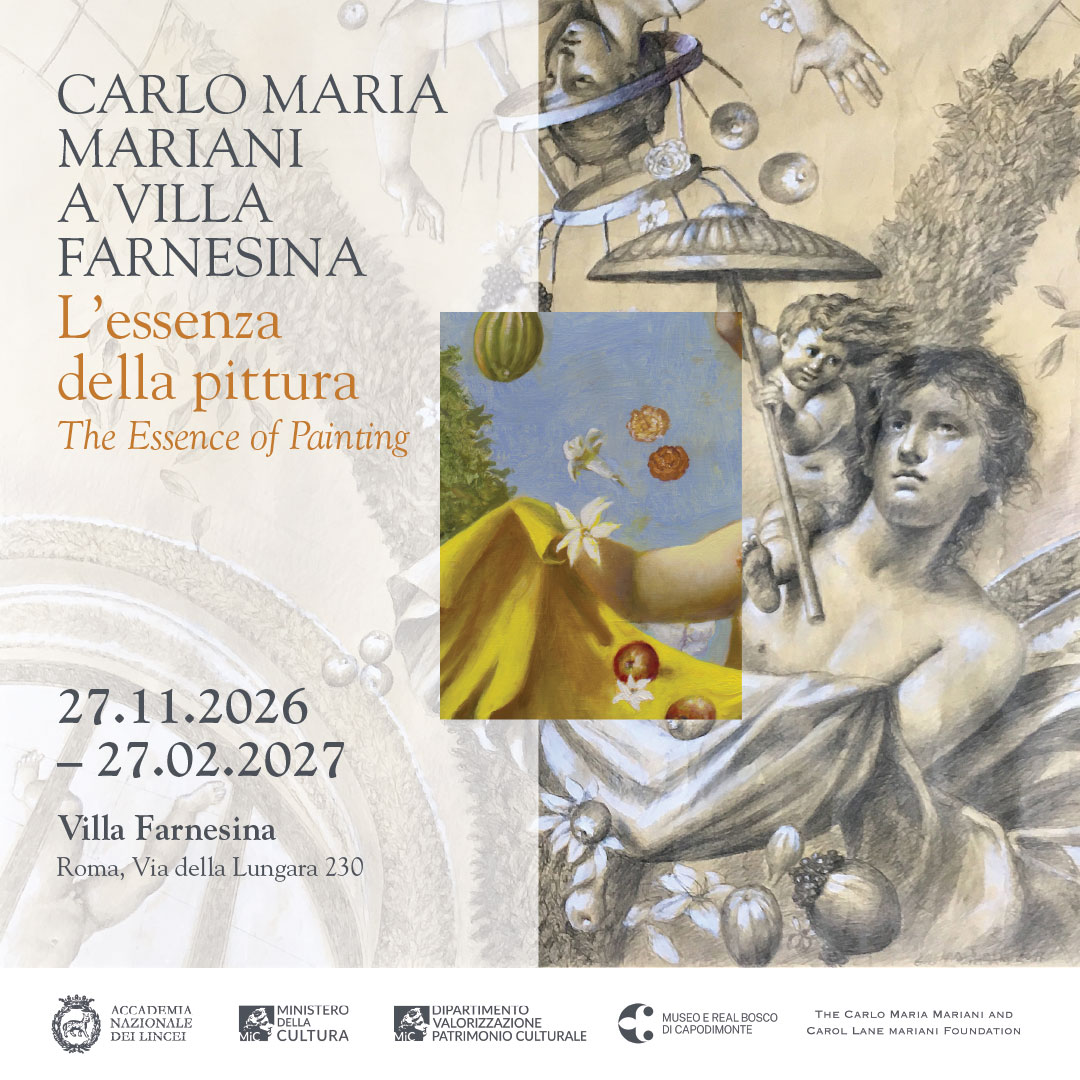
The exhibition“Carlo Maria Mariani at Villa Farnesina: The Essence of Painting”aims to celebrate the generous donation of the 2017 drawing , *Untitled (Study for *I Segni dei Tempi*) * by Carlo Maria Mariani to the Accademia Nazionale dei Lincei by the Carlo Maria Mariani and Carol Lane Mariani Foundation in New York, juxtaposing it with his painting *I Segni dei Tempi* (oil on canvas, 2019), which is part of the Collection of the Capodimonte Museum and Royal Park. This donation is a gesture of great cultural and symbolic significance that enriches the artistic heritage of the Lincei with a work of extraordinary value, cementing a bond between the Foundation and the Academy. This bond is made even more significant by the fact that Carlo Maria Mariani was awarded the Antonio Feltrinelli Prize for Painting by the Accademia Nazionale dei Lincei in 1997, a prestigious recognition of the value of his artistic work and his contribution to Italian culture.
Exhibiting these works from November 27, 2026, through February 27, 2027, in the Loggia of Cupid and Psyche at Villa Farnesina means returning them to the quintessential setting from which Mariani’s artistic vision originates, bringing together the two figures on whom his reflection has focused with the greatest consistency and depth: Raffaello Sanzio and Marcel Duchamp.
By placing Duchamp’s *Bottle Rack* (1914) within a pictorial and figurative space derived from the illusionistic pergola in Raphael’s *Lodge of Cupid and Psyche* (1517–1518) at Agostino Chigi’s Villa Farnesina, which at that time was still situated in a suburban setting, Mariani vividly highlights the profound affinity that binds these two supreme beacons of his imagination. While Raphael transforms nature into a pictorial system of botanical images, Duchamp introduces the industrial object into the realm of modern art. Mariani connects these references within a new painting, arranging them in a simultaneous relationship that brings together the Renaissance and the 20th century, figurative tradition and modernity, the legacy of the past and its reactivation in the present.