In response to the challenges posed by an ageing population and the high prevalence of dementia in Italy – which sees around 65,000 new cases of Alzheimer’s each year – the “Artesìa. Inclusività in Villa” project has been launched.
The initiative is organised and coordinated by Lamberto Maffei, President Emeritus of the Accademia Nazionale dei Lincei, together with Antonino Cattaneo, President of the EBRI Foundation, and with the support of the Associazione Amici dei Lincei.
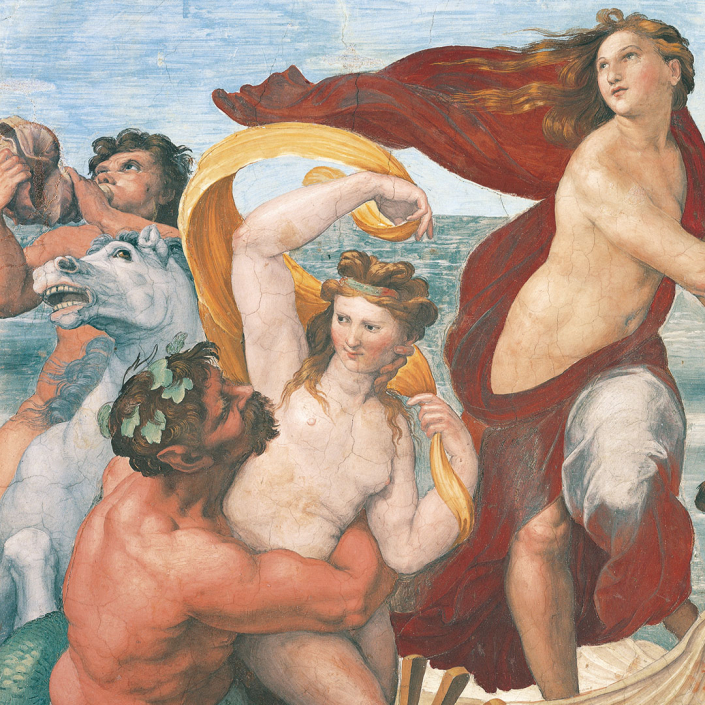
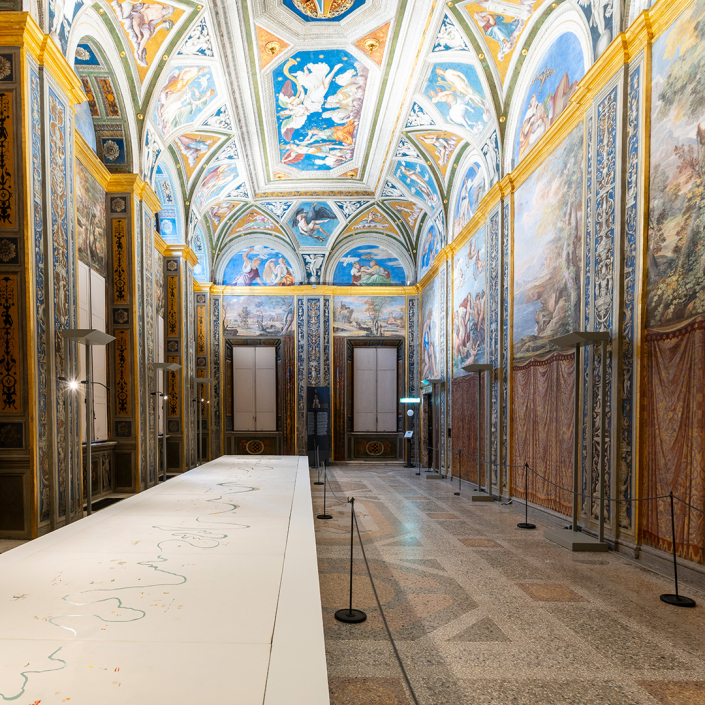
The events take place at Villa Farnesina, the official building of the Accademia Nazionale dei Lincei and a museum open to the public, renowned for its frescoes by Raphael and the most important artists of the Italian Renaissance (Sebastiano del Piombo, Sodoma and Peruzzi).
Recognising artistic heritage as a fundamental resource for social wellbeing and the inclusion of vulnerable people, the Lincei initiative transforms the museum into an effective non-pharmacological tool for wellbeing, aligning itself with new strategies for cultural welfare and social prescription, in line with the new decree that redefines the concept of disability (Legislative Decree 62/2024).
11 May 2026 marked the start of operations with the launch of the first two pilot schemes at the Villa Farnesina museum. The activities involved a group of 16 visitors – comprising 8 people with cognitive decline and 9 caregivers – who took part in specially designed guided tours.
The initiative aims to significantly improve the quality of life of patients and their families. Through a series of guided, facilitated tours and, in future, art workshops based on biopsychosocial models, the Artesìa project offers a sensory approach in which visual and narrative stimuli are integrated to foster deep emotional connections and help slow the progression of cognitive decline.
Artesìa draws inspiration from Dutch museum projects (such as the Unforgettable Museum Table) that enable multi-sensory exploration to stimulate memory and emotions through art.
The scientific validation of the project is ensured by the collaboration with the European Brain Research Institute (EBRI), an international centre of excellence founded by Nobel Laureate Rita Levi-Montalcini, and the Department of Neuroscience at Sapienza University of Rome. The rigour of the research is complemented by the technical expertise of a team of specialists who have developed Imbued, a Sapienza spin-off: a cutting-edge digital platform that combines art, creativity, neuroscience and Artificial Intelligence, enabling artistic engagement and reinterpretation whilst converting the aesthetic experience into scientific data for the study of emotions and cognitive processes.
The project thus bridges the technological gap between research and museum engagement, offering a multidisciplinary and multi-narrative approach to the Villa’s historical and artistic heritage.
For Communications
For the Accademia Nazionale dei Lincei: [email protected]; [email protected]; [email protected]
For the Ebri Foundation: [email protected]
For La Sapienza University of Rome: [email protected]