Villa Farnesina
The Loggia of Cupid and Psyche
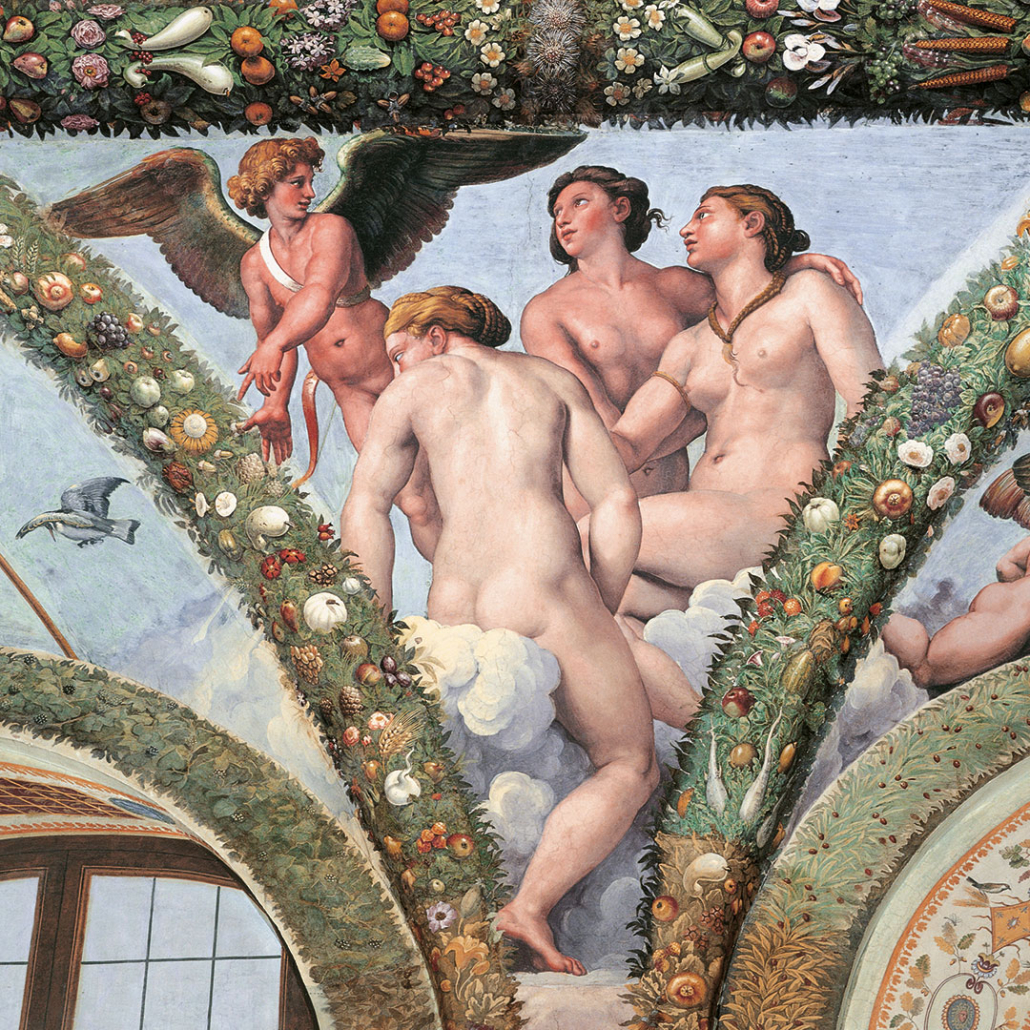
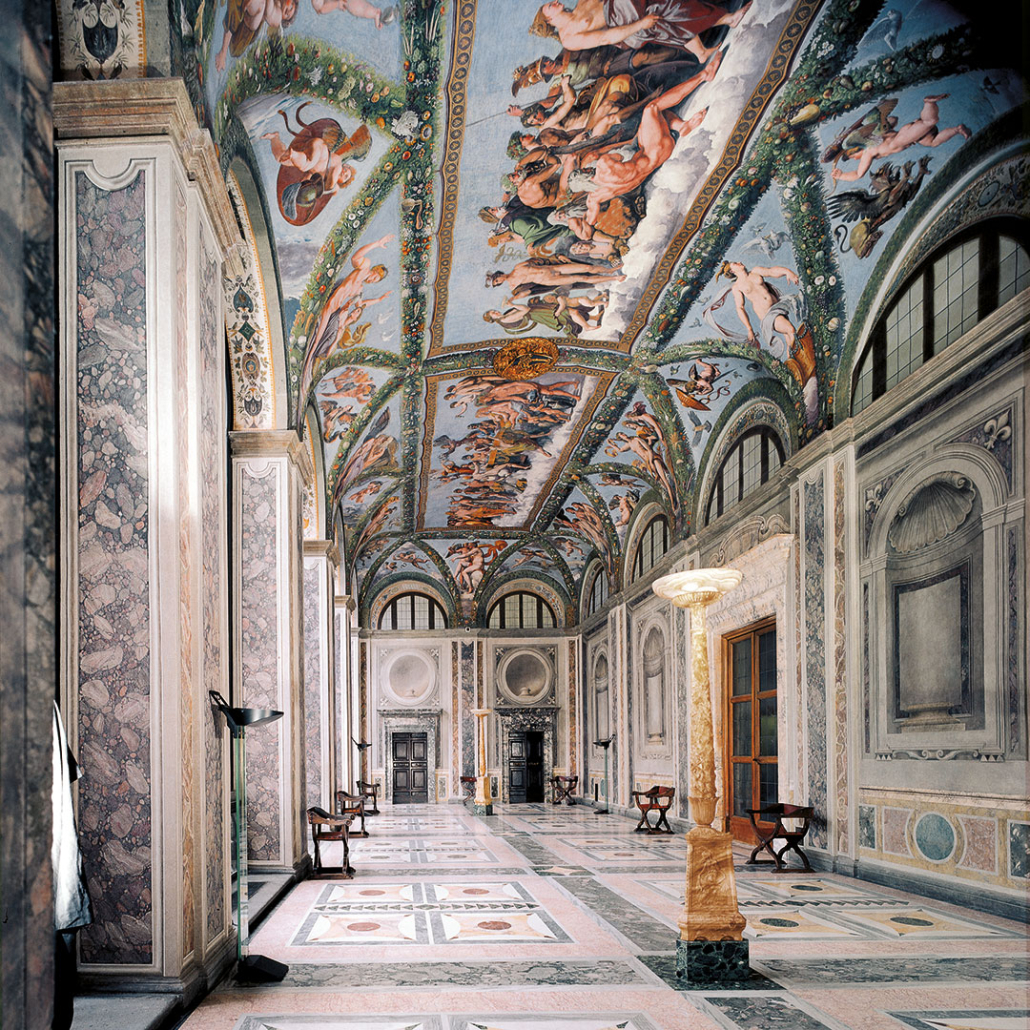
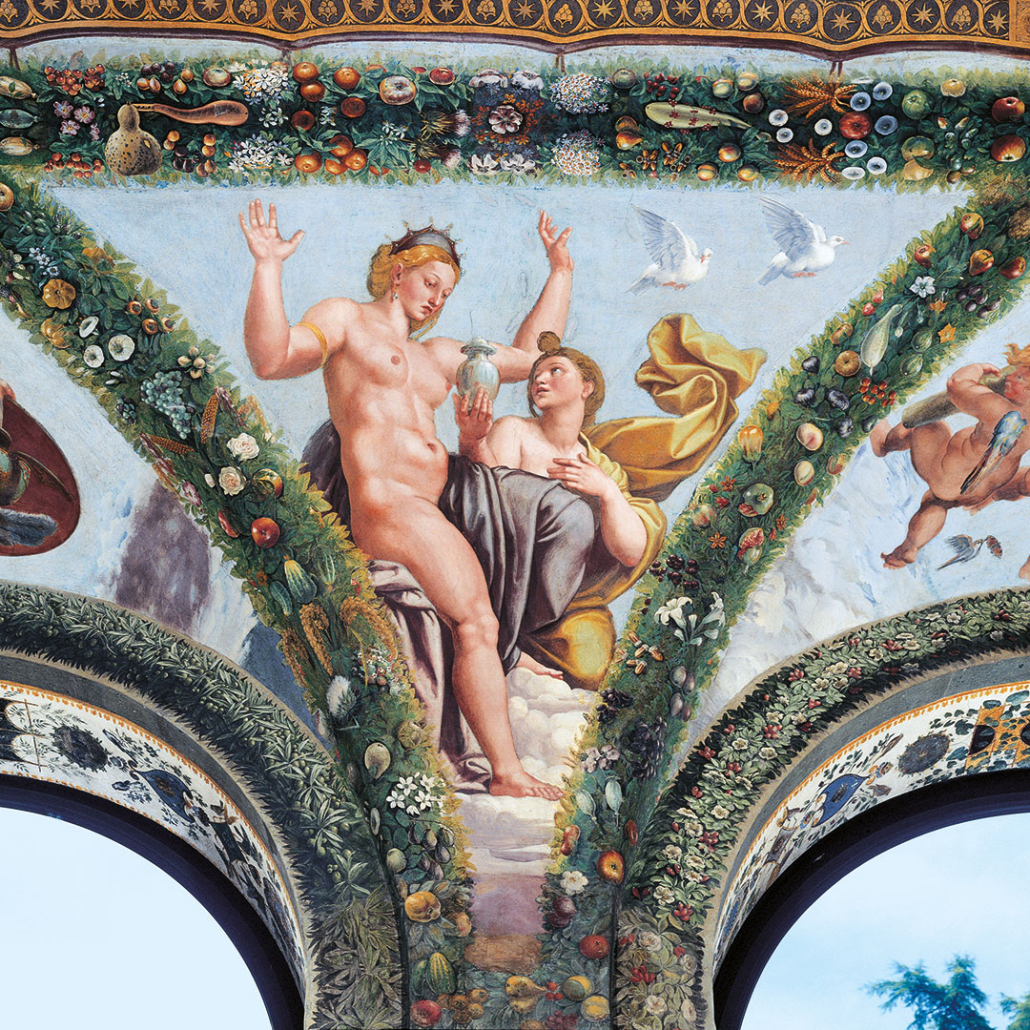
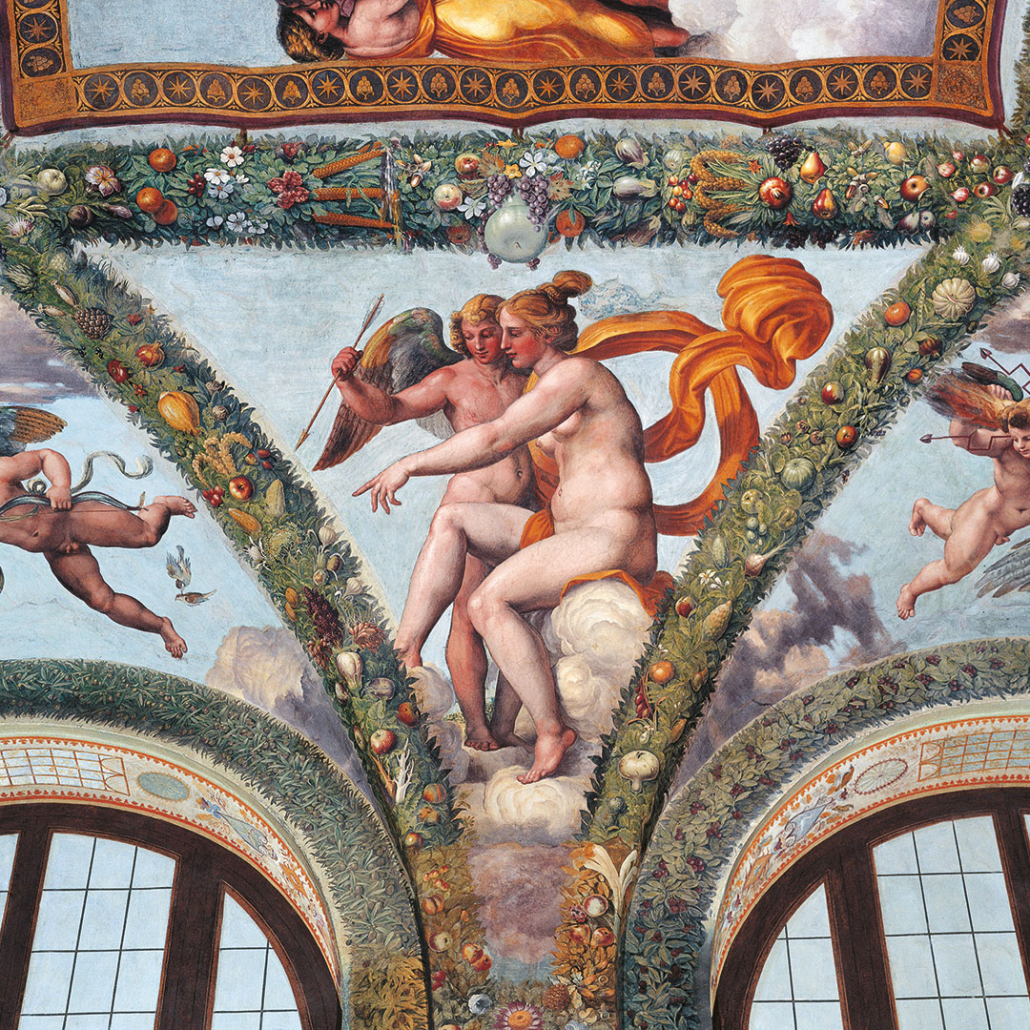
The Loggia, located on the ground floor and consisting of five arches now enclosed by protective glass, takes its name from the fresco decoration painted in 1518 on the vault by Raphael’s workshop from the master’s designs. The scenes depict episodes inspired by Apuleius’s The Golden Ass, specifically the tale of Cupid and Psyche, a theme already used in the fifteenth century for artworks with nuptial subjects.
The Loggia served as a stage for the celebrations and theatrical performances organized by the villa’s owner.
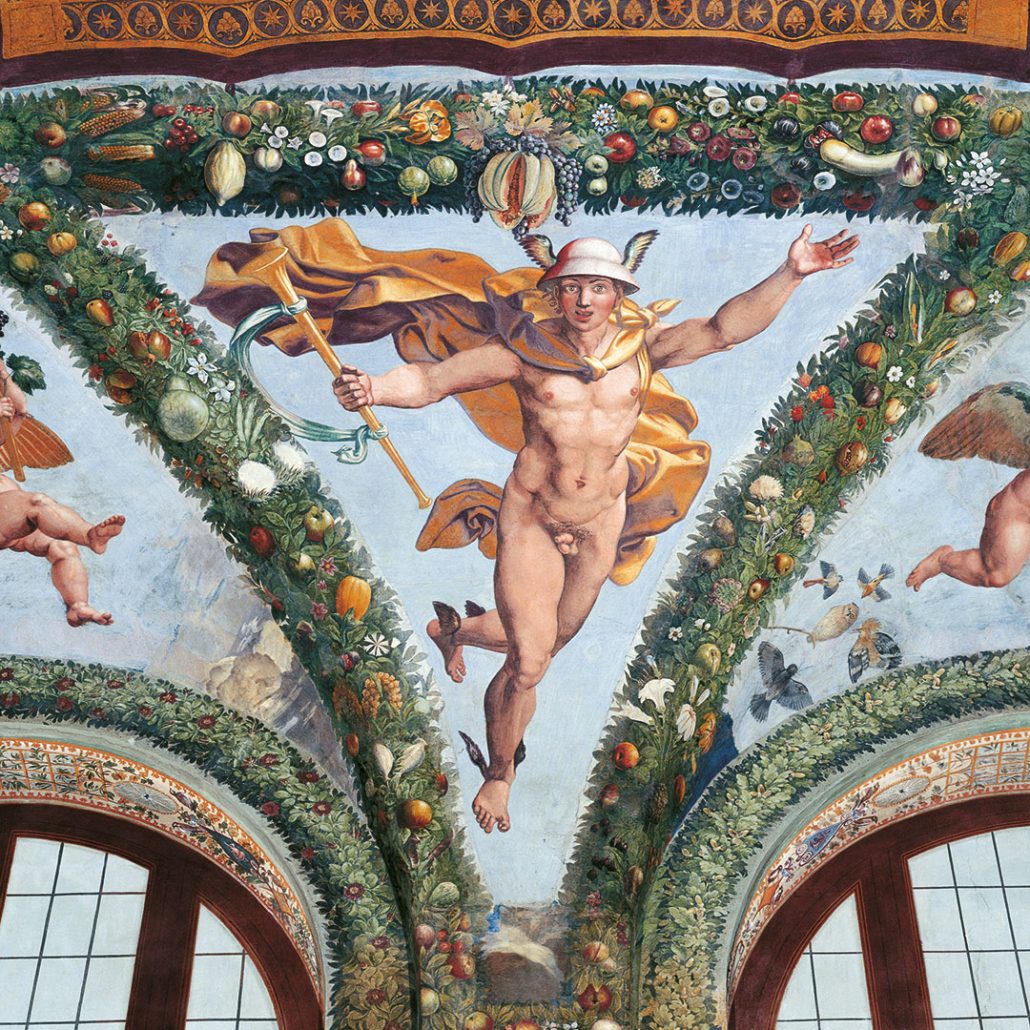
To give the space a festive and theatrical character, Raphael transformed the vault of the entrance Loggia into a pergola, as if the garden’s pavilions and trellises extended into the Villa in the form of rich garlands. At the center are two painted tapestries: the sumptuous Banquet of the Gods, in which the maiden, unjustly persecuted, is finally welcomed among the divine assembly, and The Marriage of Cupid and Psyche, the symbolic culmination of the entire cycle.
However, it should be remembered that the overall layout of the fresco and the design of the individual scenes and figures are due to Raphael’s brilliant intuition, but numerous artists from his workshop often worked on the frescoes, including Giovan Francesco Penni, Giulio Romano and Giovanni da Udine, who was responsible, in particular, for the exuberant triumph of the garlands of flowers and fruit.
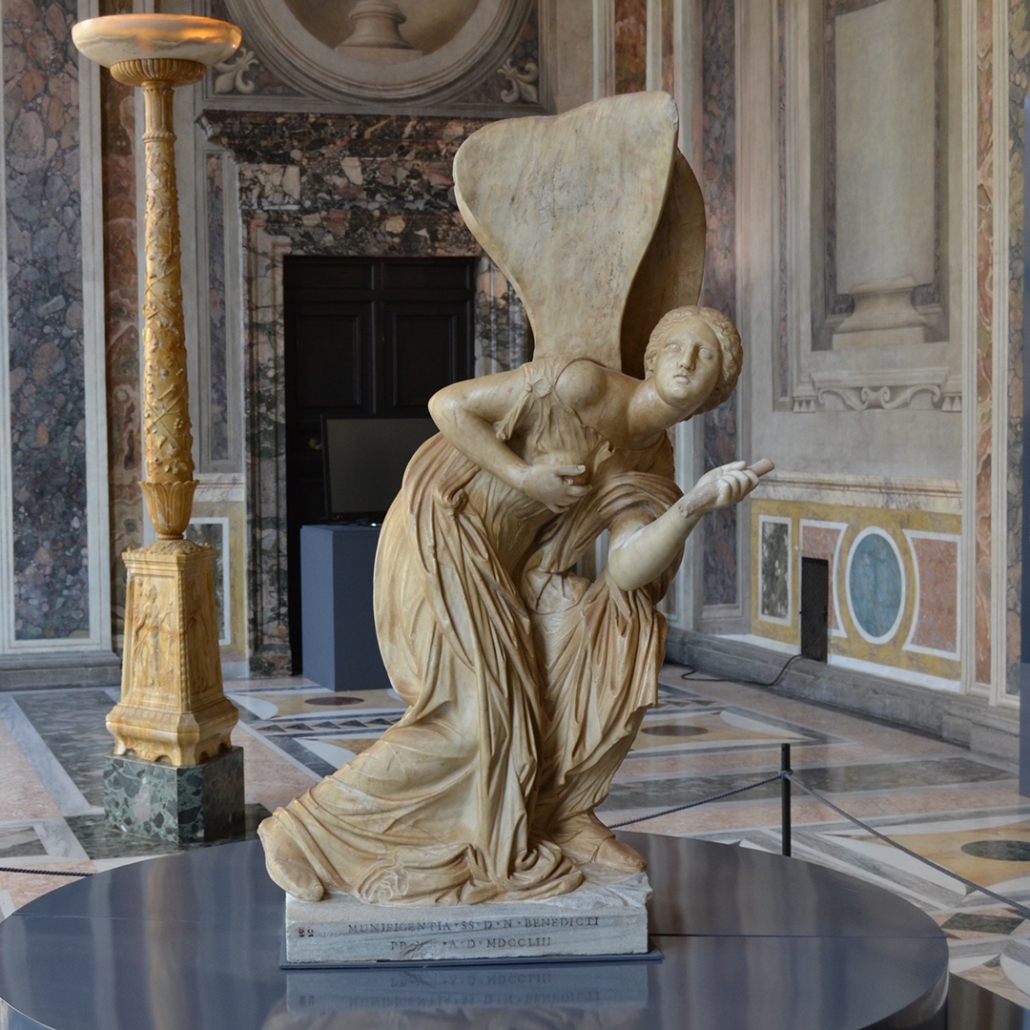
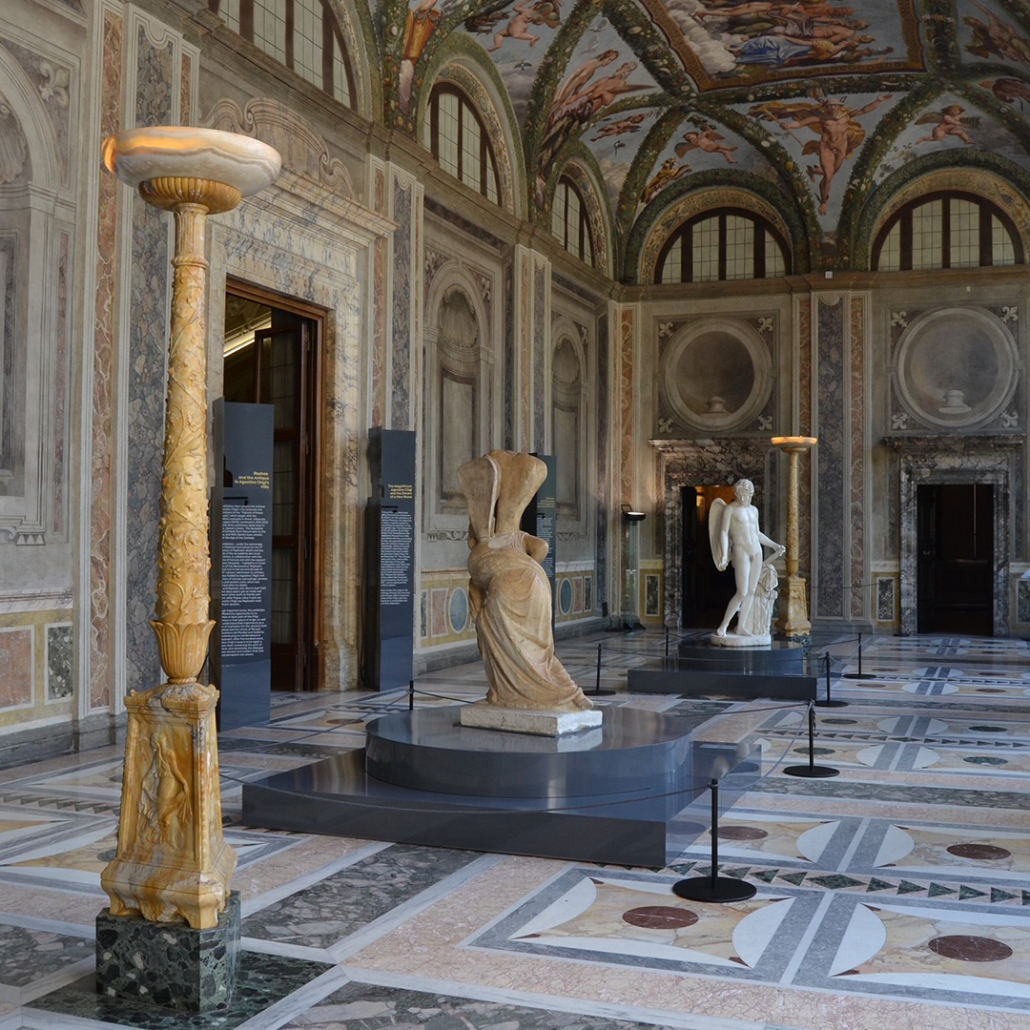
The frescoes interacted in ancient times with the classical statuary that was part of the banker’s antique collection.
The façade, decorated with Tuscan pilasters, is topped by a cornice with a festoon of cherubs. It originally overlooked the Italian garden in front of the façade.
The first significant restoration of the Loggia dates back to the 1690s, when, due to the severe state of neglect into which the Villa had fallen, Ranuccio II Farnese ordered its renovation. In 1693, the ducal agent, Abbot Felini, commissioned Carlo Maratti (1625–1713)—one of the most renowned painters of the time—and his team to begin the work.
The Raphael frescoes on the vault of the Loggia had been severely damaged by prolonged exposure to the elements and were therefore in poor condition. The restoration was consequently extensive: Maratti and his collaborators worked directly on the frescoes, consolidating them and securing the plaster with numerous clamps, filling the losses, and extending the fruit garlands—painted by Giovanni da Udine (1487–1564)—up to the springing of the arches.
As the art historian and theorist Giovan Pietro Bellori emphasized in his celebrated descriptive encomium dedicated to Maratti’s restorations (1695), these interventions were carried out with great sensitivity and respect, taking care to alter as little as possible—at least by the standards of the time—the original appearance of the Loggia.
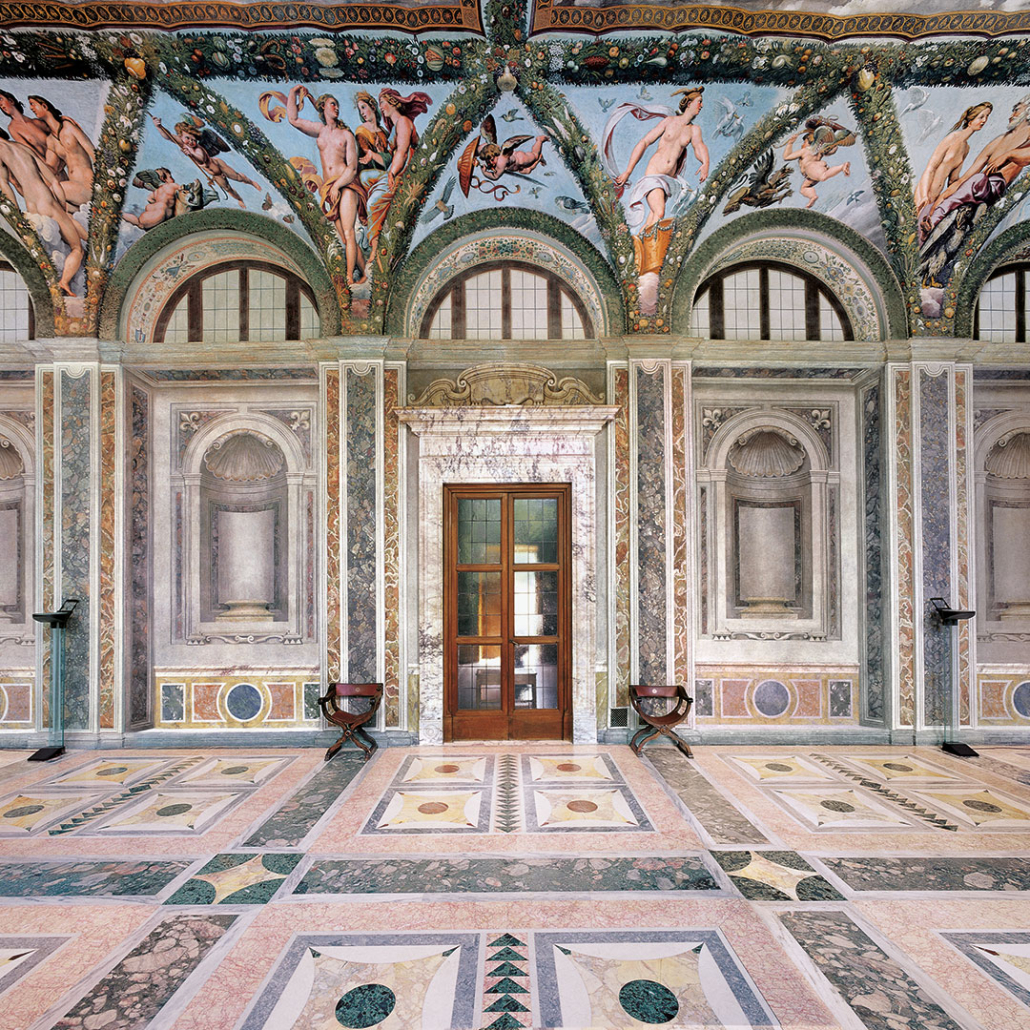
All additions were therefore designed and executed in keeping with Raphael’s work and with the aim of creating a “homogeneous” overall view. On the two short sides, two blind doors were added, which can still be seen today next to the real ones, while the walls, which had remained undecorated until then, were filled with trompe l’œil painted niches, “contenting themselves with simple architectural displays without figures out of respect for the vault” (Bellori). The lunettes at the top, also left blank, were completed with fake stained-glass windows painted in perspective, echoing the real arches of the loggia.