
RESTORATION WORKS

2021 – Gardens of Villa Farnesina

Restoration of the sarcophagus-fountain

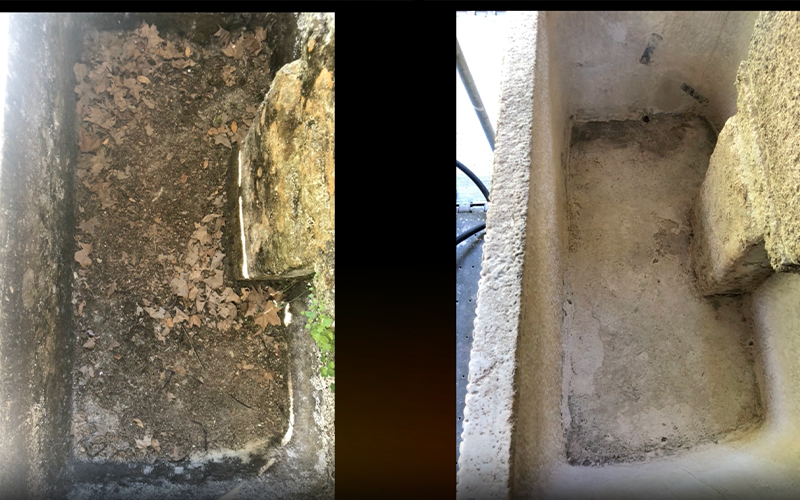
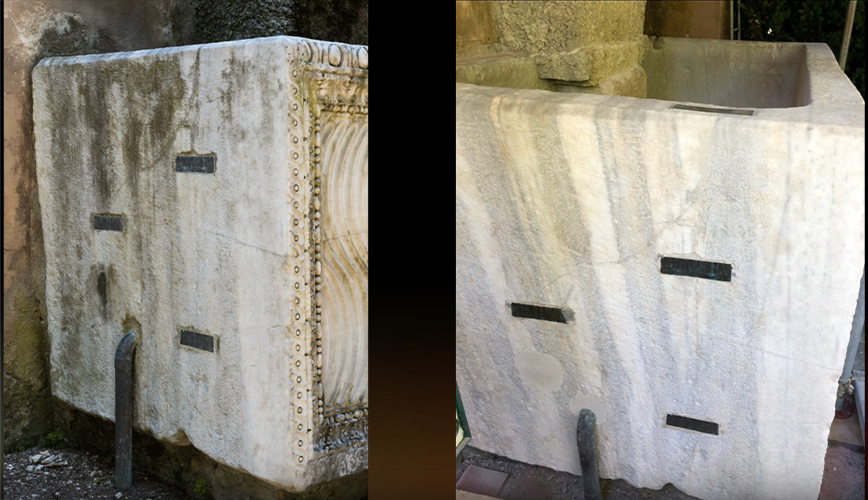
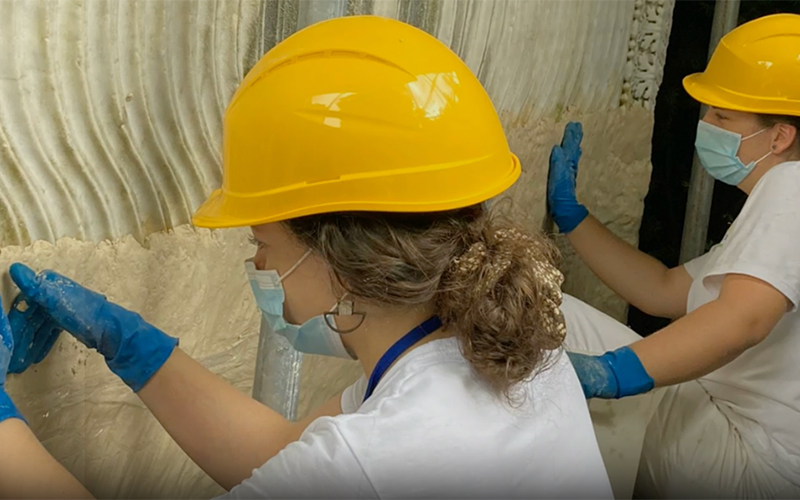
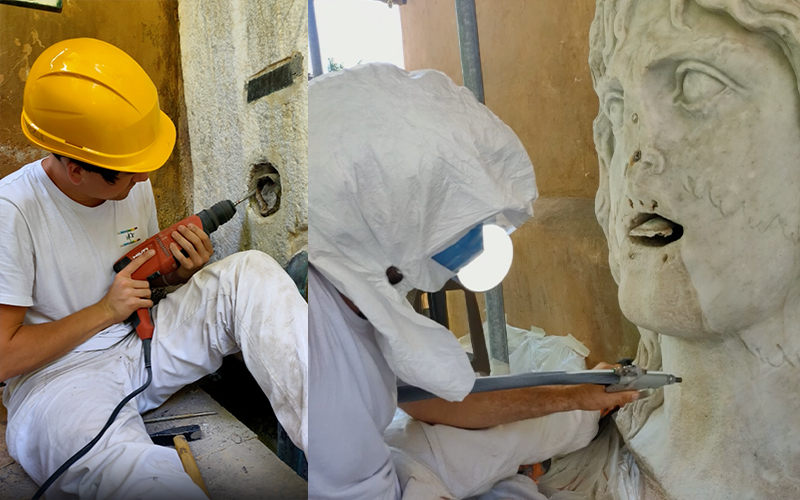
In 2021, careful restoration work was carried out on the sarcophagus converted into a fountain, located in the historic gardens of the Villa Farnesina.

The intervention succeeded in preserving its formal integrity, involving cleaning, consolidation and removal of surface deposits that obscured the original details.

Thus, an ornamental element of great charm was returned to the public, capable of recounting the layered history of the Villa between ancient and modern times. The operation combined technical rigour and conservationist care, restoring light and harmony to this rare stone artefact immersed in Renaissance greenery.
Watch the video

2020 – North Wall of the Loggia of Galatea

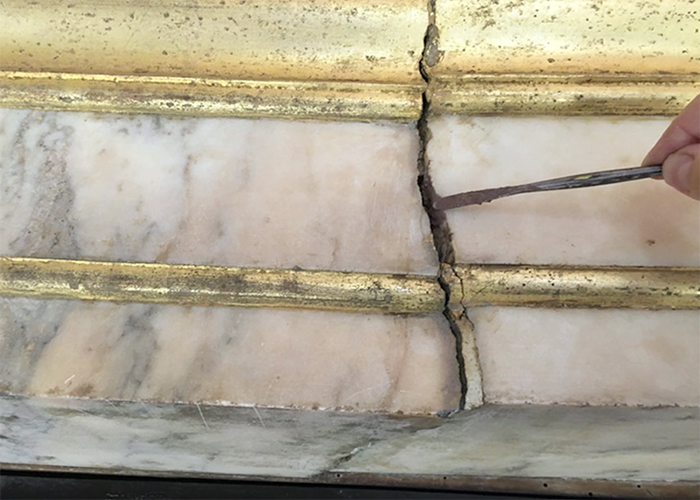
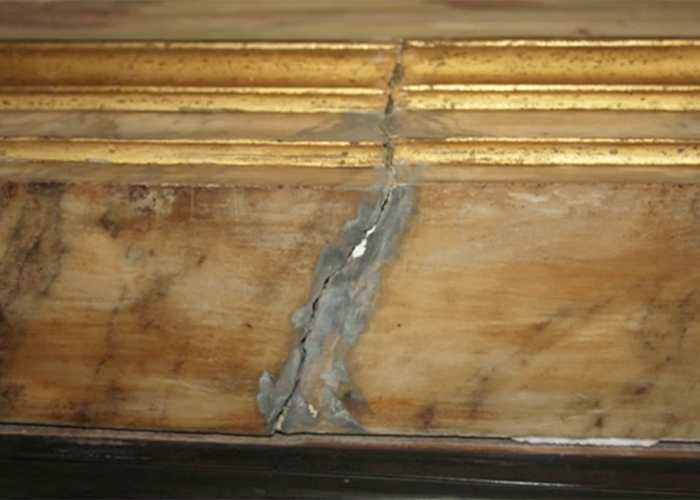
Restoration of the two portals on the north wall of the Loggia di Galatea

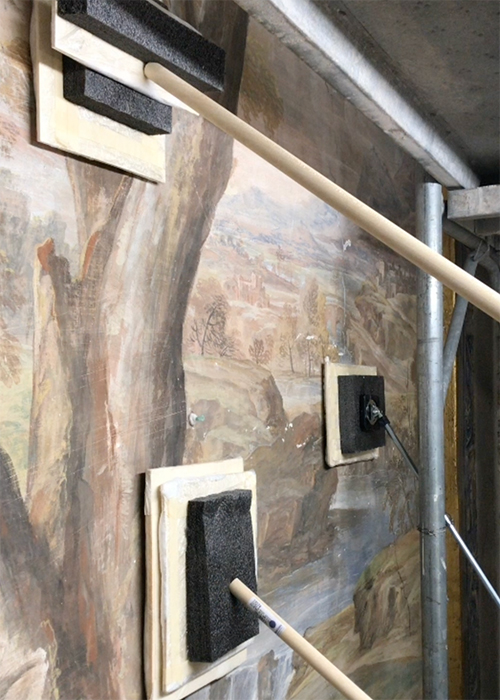
In 2019, major conservation work was completed on the five decorative landscapes attributed to the 17th-century painter Gaspard Dughet, located on the north and west walls of the Loggia di Galatea.

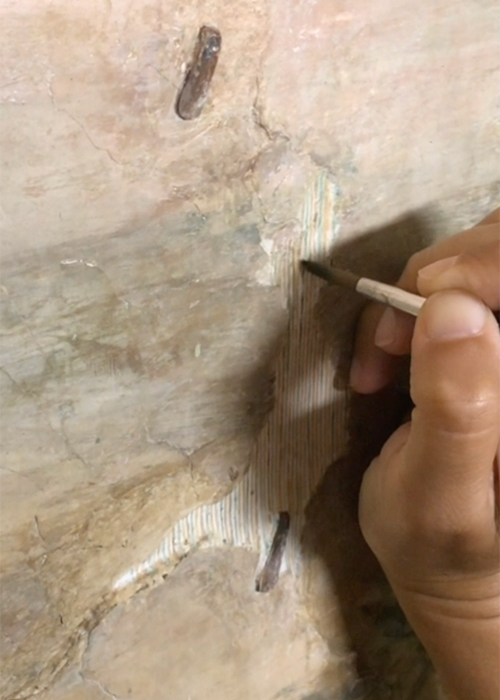
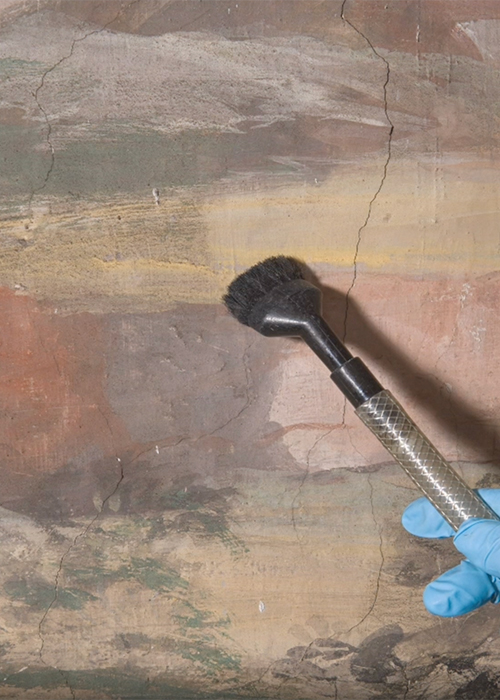
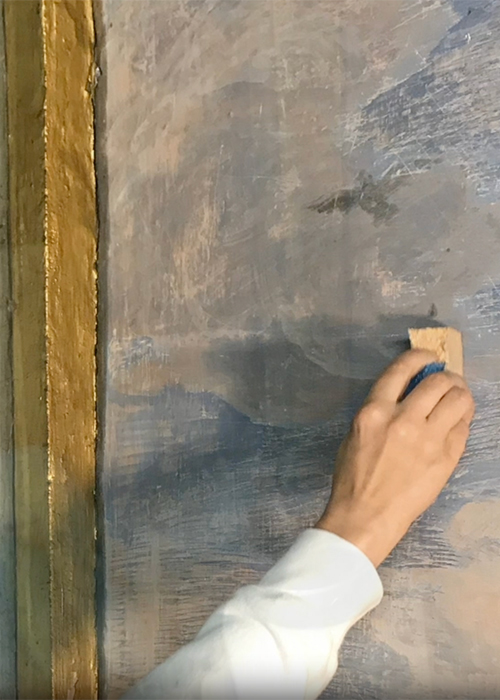
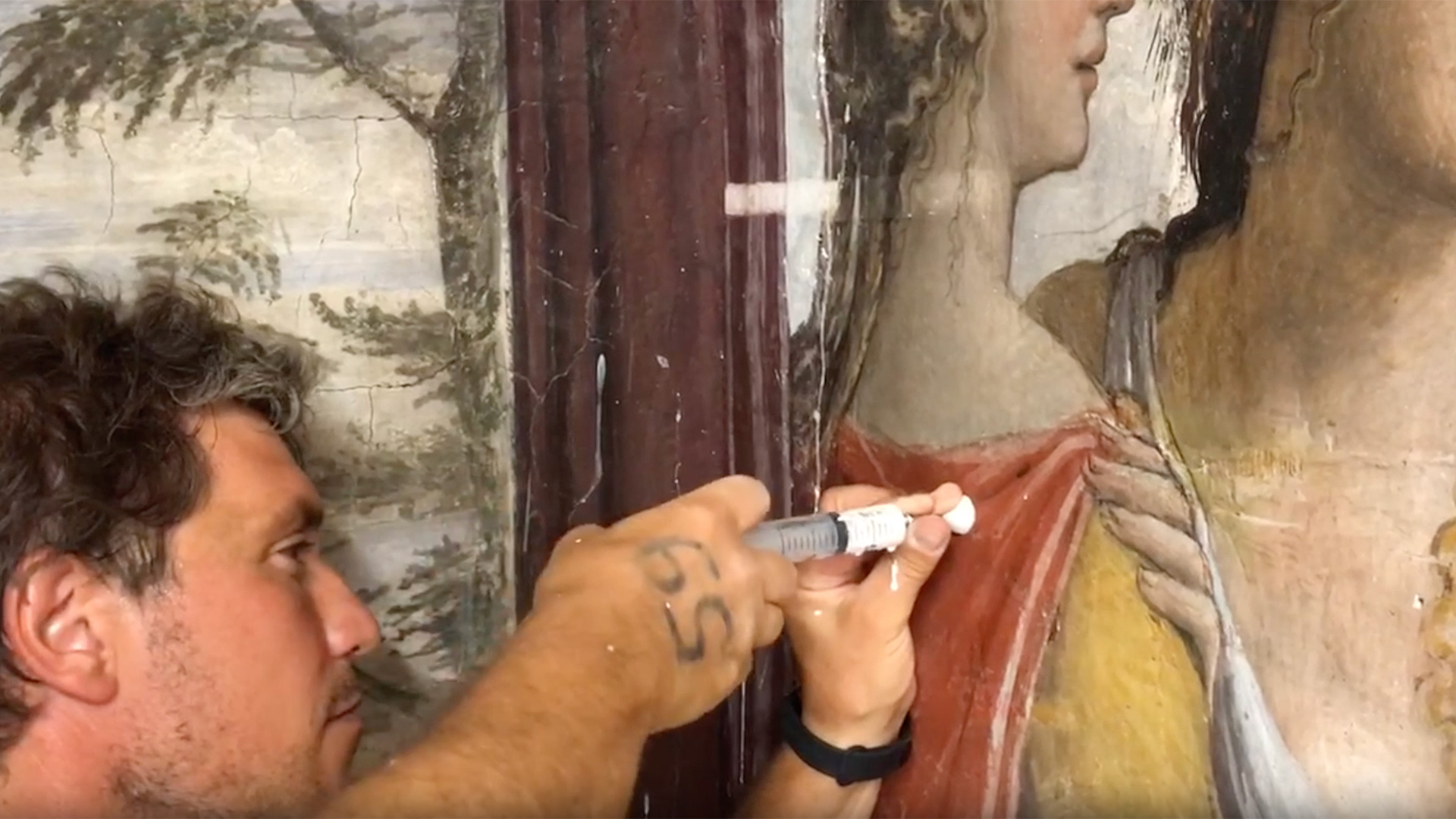
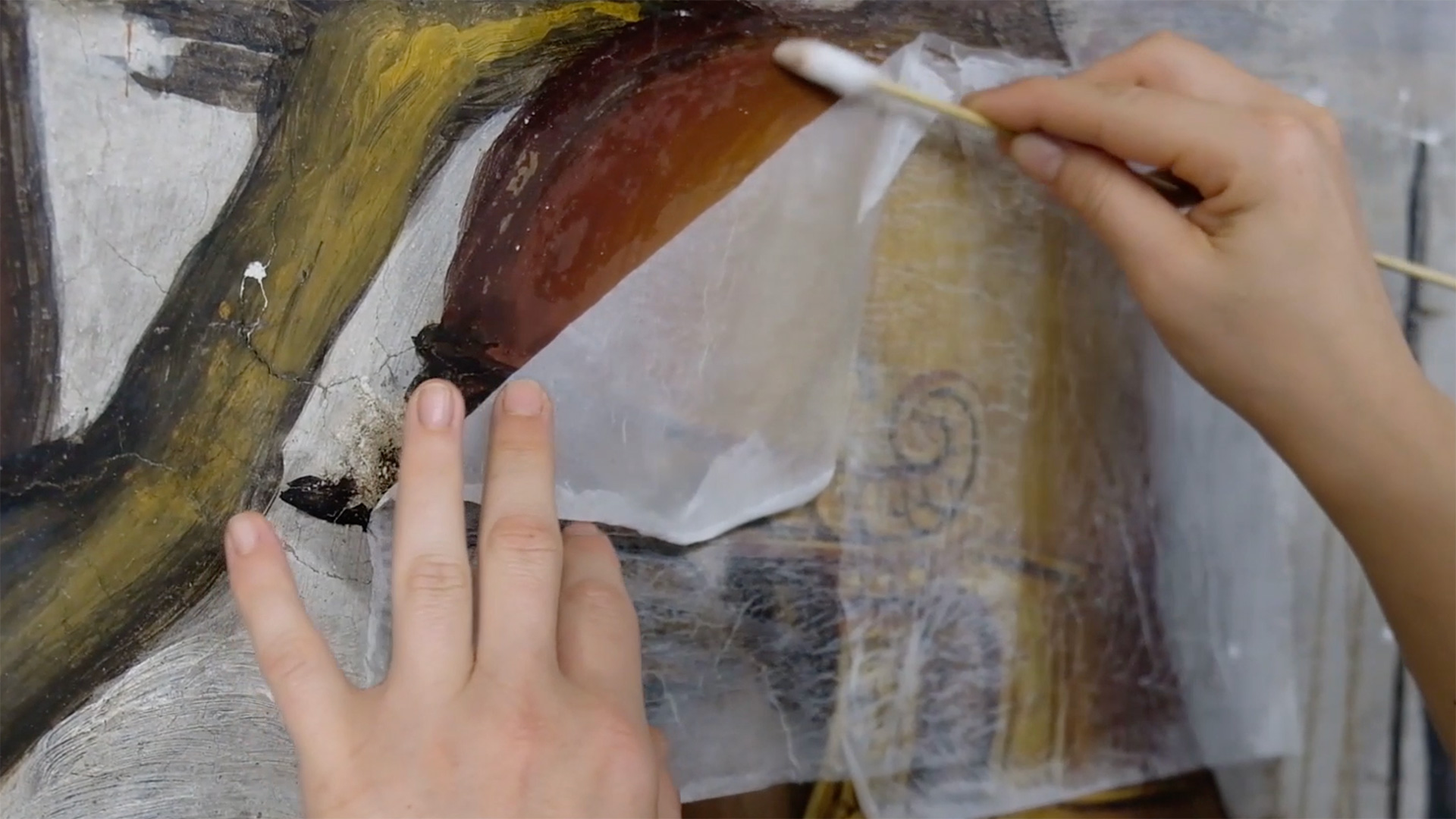
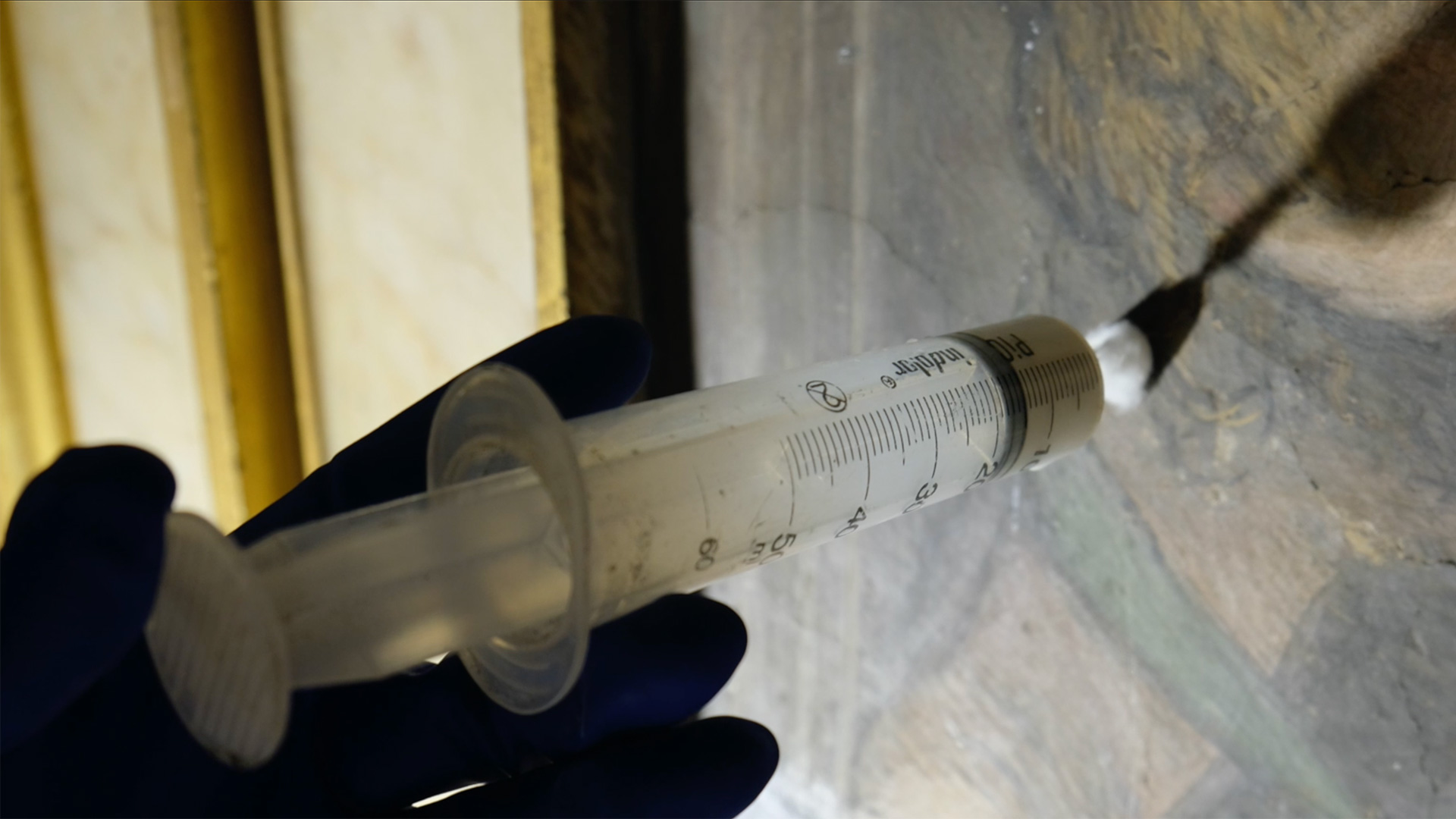
Restorers Giovanna Antonelli, Maria Rosaria Basileo and Giorgia Galanti carried out a delicate cleaning process using controlled solvents, followed by the filling and consolidation of the original paint layers, removing subsequent materials that compromised their legibility. The approach adopted favoured compatible and reversible materials, fully respecting the stratigraphic history of the work.

This operation has restored beauty and visibility to landscape decorations that had previously been compromised by environmental changes and deterioration, reaffirming the importance of these spaces as the ideal setting for Raphael’s Triumph of Galatea and the dreamlike works of the Loggia. In addition, the restoration has advanced technical knowledge of 17th-century painting techniques at the Villa Farnesina.

Watch the video

2019 – North and West Wall of the Loggia of Galatea

The restoration of the five landscapes by Gaspard Dughet in the Loggia di Galatea

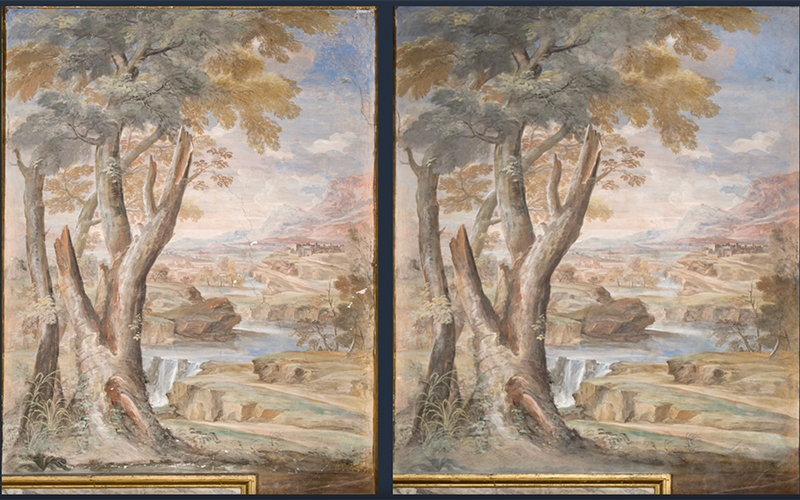
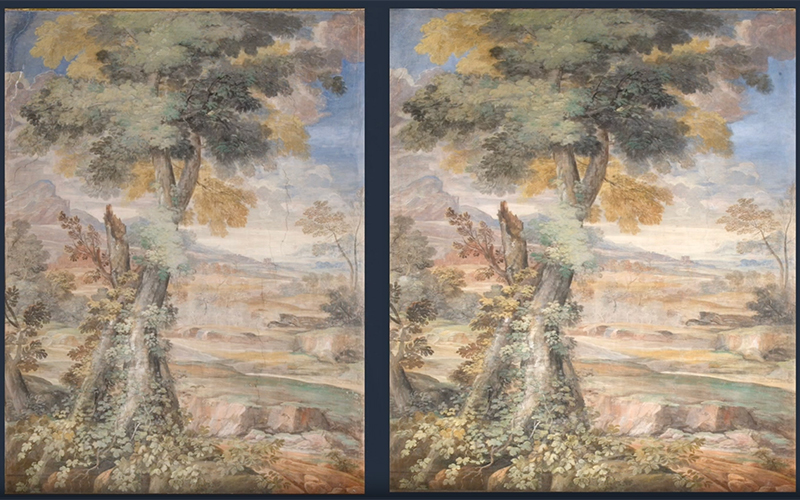
In 2019, major conservation work was completed on the five decorative landscapes attributed to the 17th-century painter Gaspard Dughet, located on the north and west walls of the Loggia di Galatea.

Restorers Giovanna Antonelli, Maria Rosaria Basileo and Giorgia Galanti carried out a delicate cleaning process using controlled solvents, followed by the filling and consolidation of the original paint layers, removing subsequent materials that compromised their legibility. The approach adopted favoured compatible and reversible materials, fully respecting the stratigraphic history of the work.

This operation has restored beauty and visibility to landscape decorations that had previously been compromised by environmental changes and deterioration, reaffirming the importance of these spaces as the ideal setting for Raphael’s Triumph of Galatea and the dreamlike works of the Loggia. In addition, the restoration has advanced technical knowledge of 17th-century painting techniques at the Villa Farnesina.

Watch the video

2019

Restoration of the east wall of the wedding chamber of Alexander and Roxane

The recent restoration work focused on the east wall of the famous chamber frescoed by Raphael and his workshop, bringing the scenes back to their original freshness.

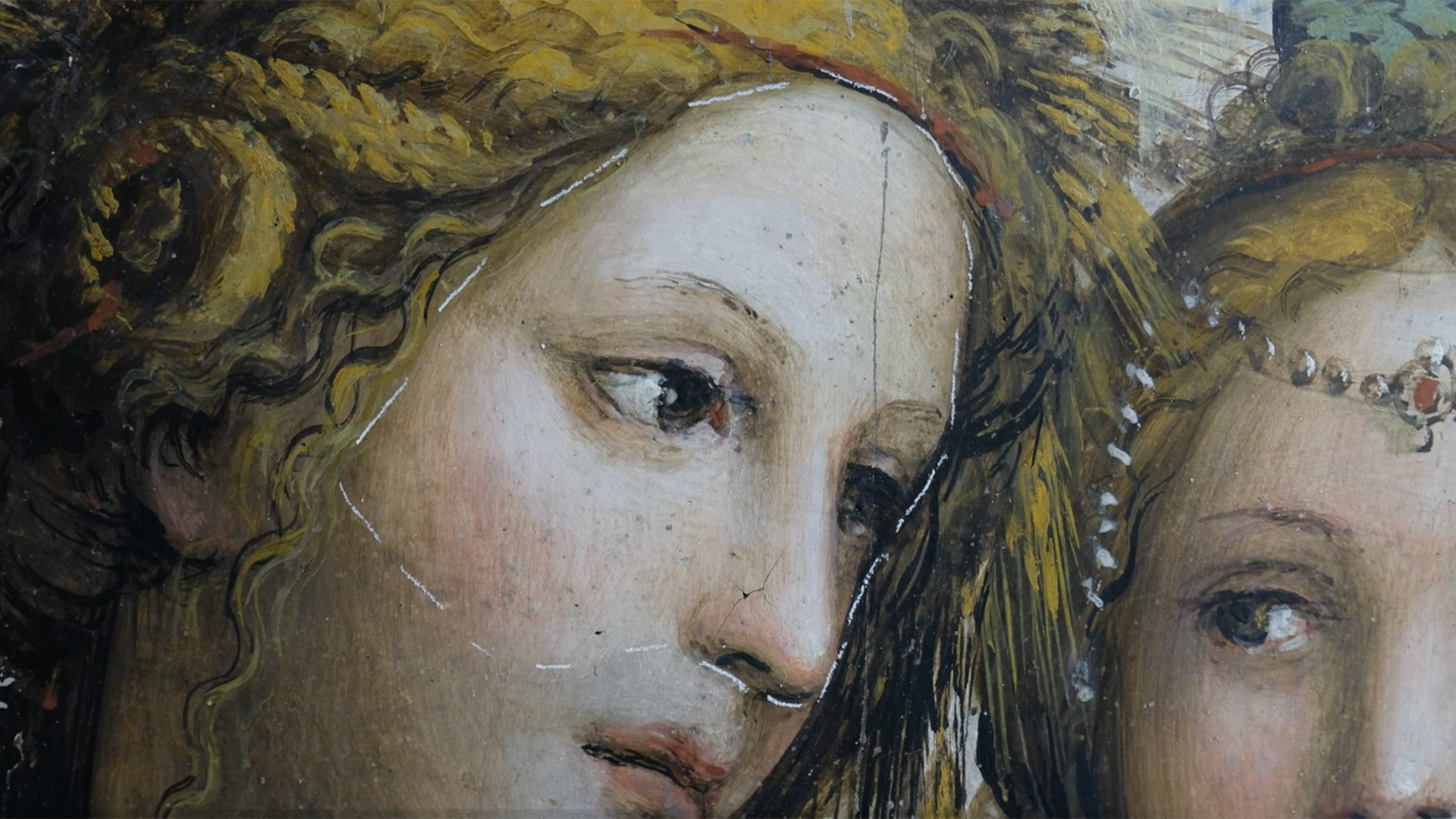
The work has made it possible to remove the repainting and deposits that had accumulated over the centuries, restoring the brilliance of the colours and the fineness of the pictorial details.

Thanks to this work, the story of the wedding between Alexander the Great and Roxane regains visual unity and clarity, restoring to visitors the narrative intensity and evocative power imagined by the artist in the 16th century.

Watch the video

2009 – 2018

The nineteenth century at Villa Farnesina: restoration work

In the nineteenth century, Villa Farnesina underwent a period of intense transformation.
The new owners and institutions, in an attempt to adapt the spaces to modern needs, undertook works that profoundly altered the original appearance of the building.
The loggias were closed with fixtures and windows, the walls were embellished with new decorations and the connecting spaces were reorganised: choices that, while altering the Renaissance layout, restored the Villa to a position of prestige in nineteenth-century Rome.

The so-called Pompeian Room, decorated in neoclassical style, and the adjacent rooms still bear the mark of the renovations carried out by the Duke of Ripalta, who redesigned a significant part of the residence between 1861 and 1863.

At the same time, the construction of the Tiber embankments radically transformed the relationship between the Villa and the river: the garden was drastically reduced and the loggia overlooking the water disappeared, depriving the building of its natural green setting.
Despite these losses, the nineteenth-century restoration allowed the Farnesina to embark on a new chapter in its history, hosting institutional functions and continuing to be a cultural reference point for scholars and travellers from all over Europe.

Watch the video

2015

The Restoration of the Gallery of Grotesques

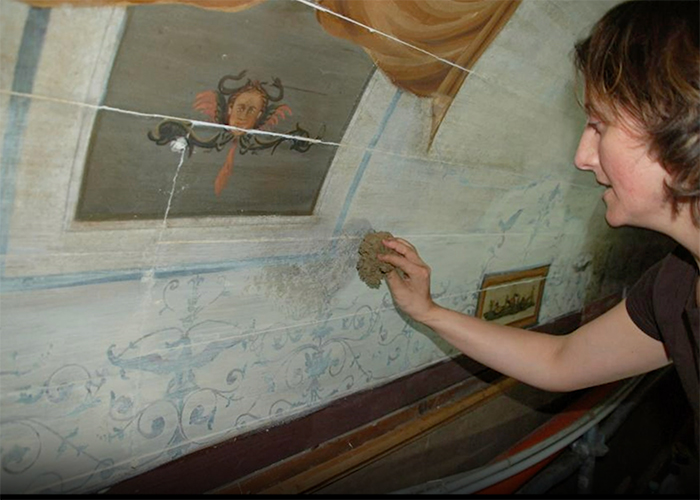
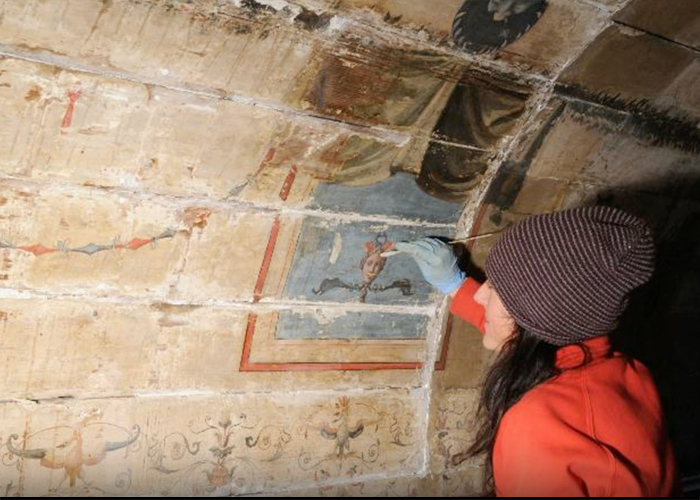
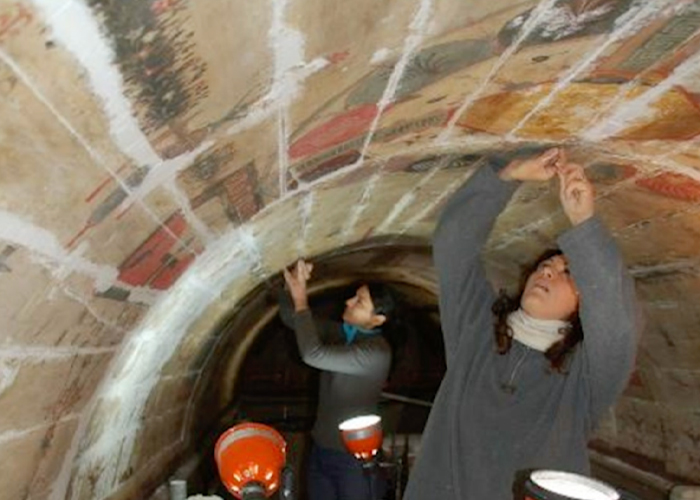
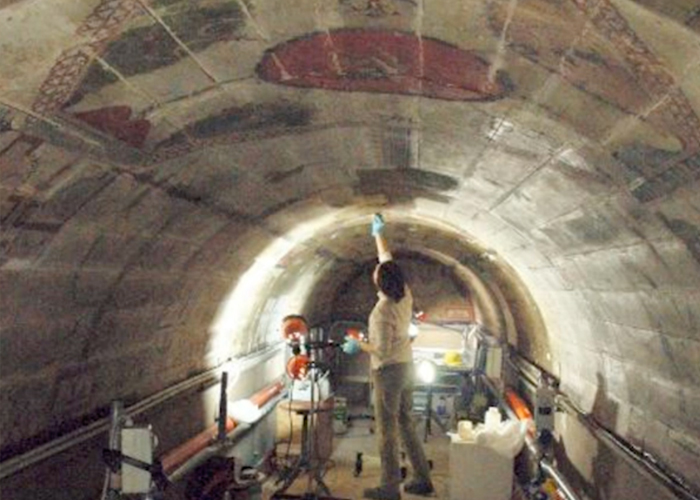
In 2015, the Gallery of Grotesques at Villa Farnesina underwent major restoration work carried out by the ISCR.

This passageway, decorated in the 16th century with refined grotesques on a wooden ceiling – unique in the Renaissance landscape – had been obscured by dust, repainting and darkening in the 20th century.

The restoration brought the original colours back to light, revealing surprising details: preparatory drawings, signs of dusting and traces of ancient renovations, including a faux 19th-century coffered ceiling.

Thanks also to a new LED lighting system, the room is once again accessible to the public, restoring the brilliance of the decorations and a fundamental piece of the magnificence of Villa Farnesina.

Watch the video

Listen to the podcast

RESTORATION WORKS

2021 – Gardens of Villa Farnesina

Restoration of the sarcophagus-fountain

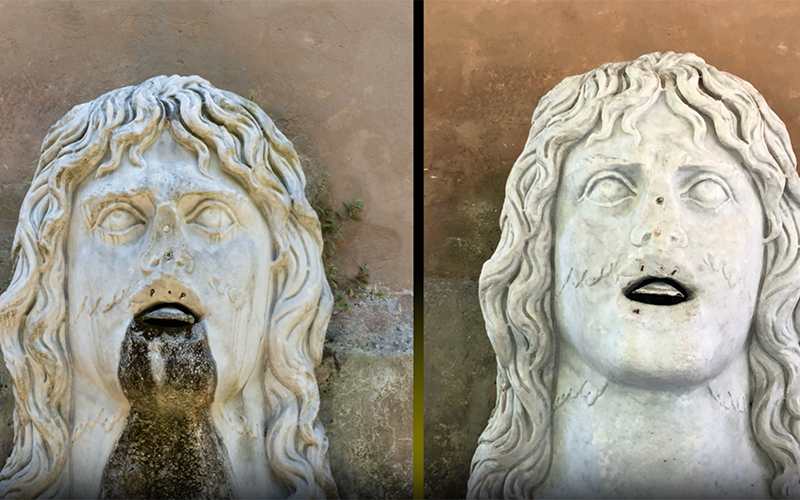
In 2021, careful restoration work was carried out on the sarcophagus converted into a fountain, located in the historic gardens of the Villa Farnesina.

The intervention succeeded in preserving its formal integrity, involving cleaning, consolidation and removal of surface deposits that obscured the original details.

Thus, an ornamental element of great charm was returned to the public, capable of recounting the layered history of the Villa between ancient and modern times. The operation combined technical rigour and conservationist care, restoring light and harmony to this rare stone artefact immersed in Renaissance greenery.
2020 – North Wall of the Loggia of Galatea

Restoration of the two portals on the north wall of the Loggia di Galatea

In 2019, major conservation work was completed on the five decorative landscapes attributed to the 17th-century painter Gaspard Dughet, located on the north and west walls of the Loggia di Galatea.

Restorers Giovanna Antonelli, Maria Rosaria Basileo and Giorgia Galanti carried out a delicate cleaning process using controlled solvents, followed by the filling and consolidation of the original paint layers, removing subsequent materials that compromised their legibility. The approach adopted favoured compatible and reversible materials, fully respecting the stratigraphic history of the work.

This operation has restored beauty and visibility to landscape decorations that had previously been compromised by environmental changes and deterioration, reaffirming the importance of these spaces as the ideal setting for Raphael’s Triumph of Galatea and the dreamlike works of the Loggia. In addition, the restoration has advanced technical knowledge of 17th-century painting techniques at the Villa Farnesina.

2019 – North and West Wall of the Loggia of Galatea

The restoration of the five landscapes by Gaspard Dughet in the Loggia di Galatea

In 2019, major conservation work was completed on the five decorative landscapes attributed to the 17th-century painter Gaspard Dughet, located on the north and west walls of the Loggia di Galatea.

Restorers Giovanna Antonelli, Maria Rosaria Basileo and Giorgia Galanti carried out a delicate cleaning process using controlled solvents, followed by the filling and consolidation of the original paint layers, removing subsequent materials that compromised their legibility. The approach adopted favoured compatible and reversible materials, fully respecting the stratigraphic history of the work.

This operation has restored beauty and visibility to landscape decorations that had previously been compromised by environmental changes and deterioration, reaffirming the importance of these spaces as the ideal setting for Raphael’s Triumph of Galatea and the dreamlike works of the Loggia. In addition, the restoration has advanced technical knowledge of 17th-century painting techniques at the Villa Farnesina.

2019

Restoration of the east wall of the wedding chamber of Alexander and Roxane

The recent restoration work focused on the east wall of the famous chamber frescoed by Raphael and his workshop, bringing the scenes back to their original freshness.

The work has made it possible to remove the repainting and deposits that had accumulated over the centuries, restoring the brilliance of the colours and the fineness of the pictorial details.

Thanks to this work, the story of the wedding between Alexander the Great and Roxane regains visual unity and clarity, restoring to visitors the narrative intensity and evocative power imagined by the artist in the 16th century.

2009 – 2018

The nineteenth century at Villa Farnesina: restoration work

In the nineteenth century, Villa Farnesina underwent a period of intense transformation.
The new owners and institutions, in an attempt to adapt the spaces to modern needs, undertook works that profoundly altered the original appearance of the building.
The loggias were closed with fixtures and windows, the walls were embellished with new decorations and the connecting spaces were reorganised: choices that, while altering the Renaissance layout, restored the Villa to a position of prestige in nineteenth-century Rome.

The so-called Pompeian Room, decorated in neoclassical style, and the adjacent rooms still bear the mark of the renovations carried out by the Duke of Ripalta, who redesigned a significant part of the residence between 1861 and 1863.

At the same time, the construction of the Tiber embankments radically transformed the relationship between the Villa and the river: the garden was drastically reduced and the loggia overlooking the water disappeared, depriving the building of its natural green setting.
Despite these losses, the nineteenth-century restoration allowed the Farnesina to embark on a new chapter in its history, hosting institutional functions and continuing to be a cultural reference point for scholars and travellers from all over Europe.

2015

The Restoration of the Gallery of Grotesques

In 2015, the Gallery of Grotesques at Villa Farnesina underwent major restoration work carried out by the ISCR.

This passageway, decorated in the 16th century with refined grotesques on a wooden ceiling – unique in the Renaissance landscape – had been obscured by dust, repainting and darkening in the 20th century.

The restoration brought the original colours back to light, revealing surprising details: preparatory drawings, signs of dusting and traces of ancient renovations, including a faux 19th-century coffered ceiling.

Thanks also to a new LED lighting system, the room is once again accessible to the public, restoring the brilliance of the decorations and a fundamental piece of the magnificence of Villa Farnesina.