The Loggia of Cupid and Psyche
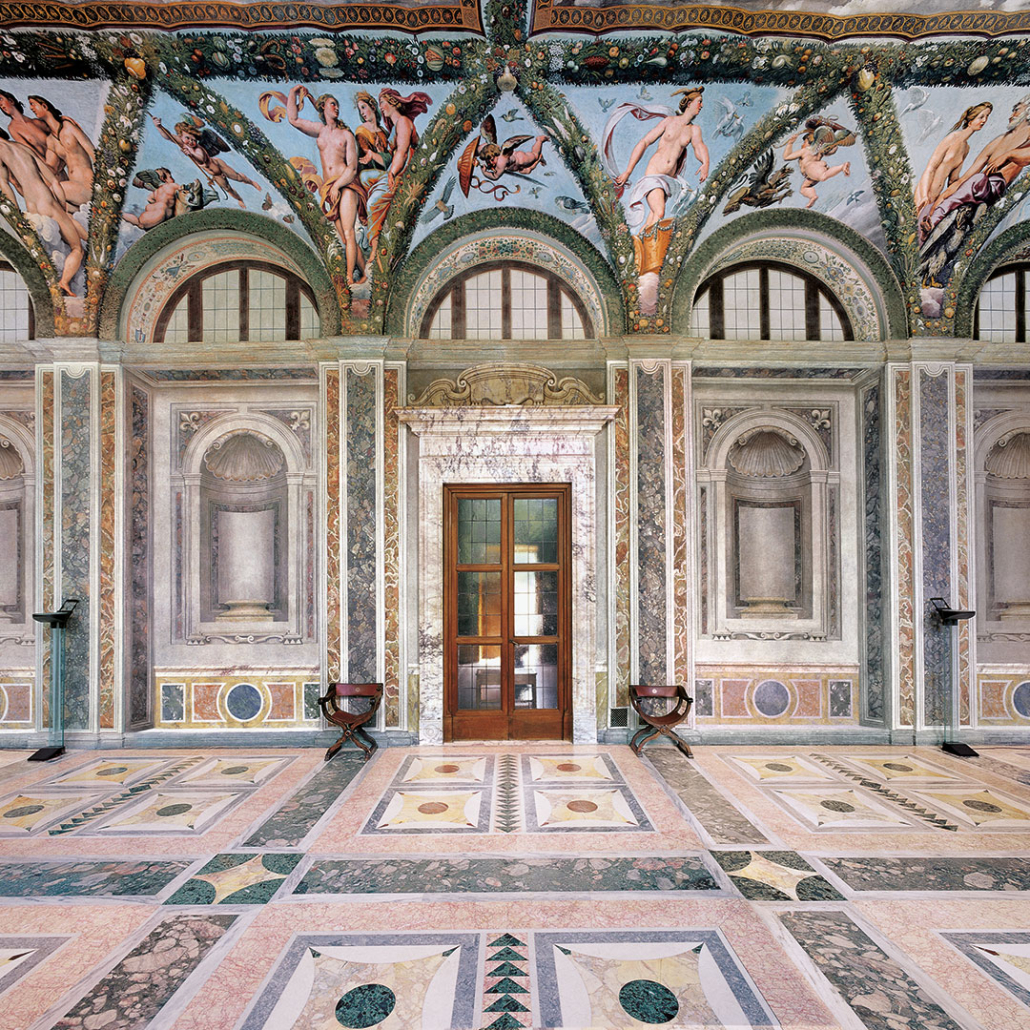
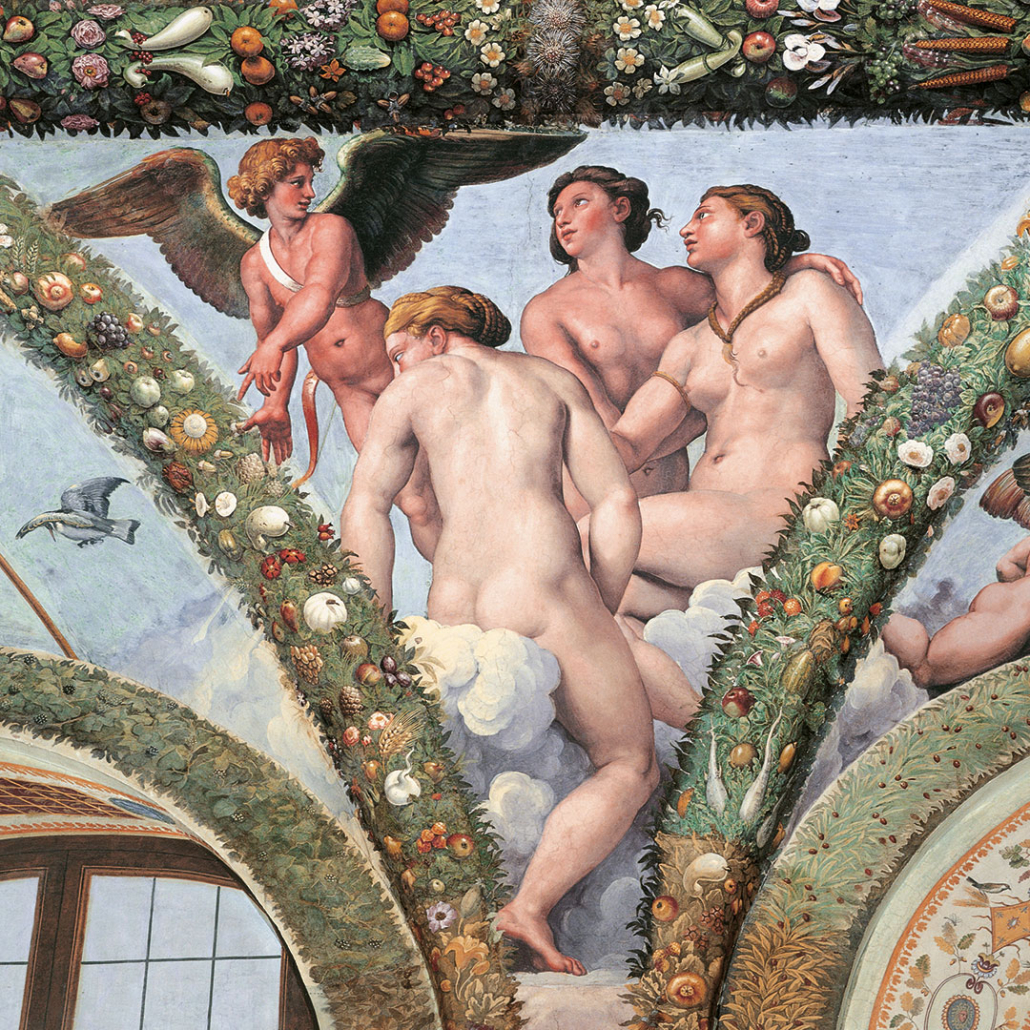
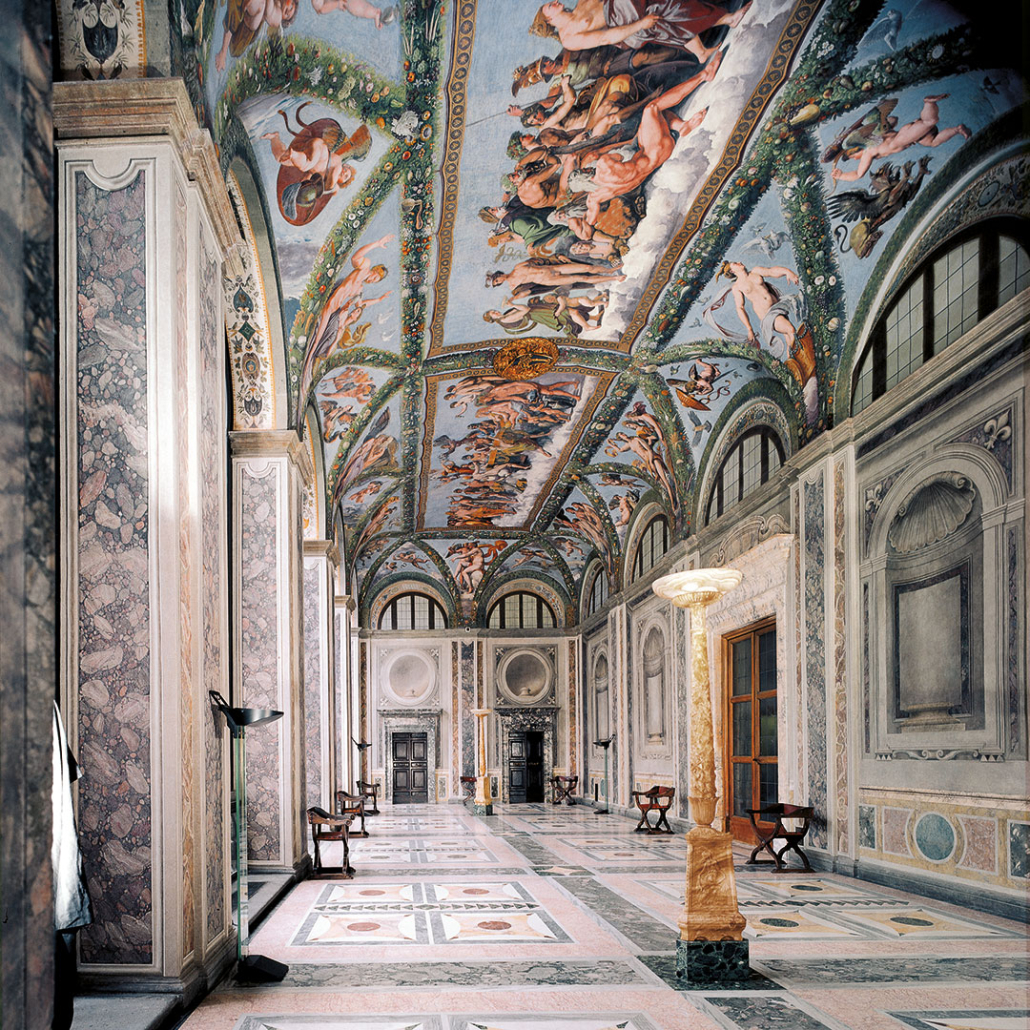
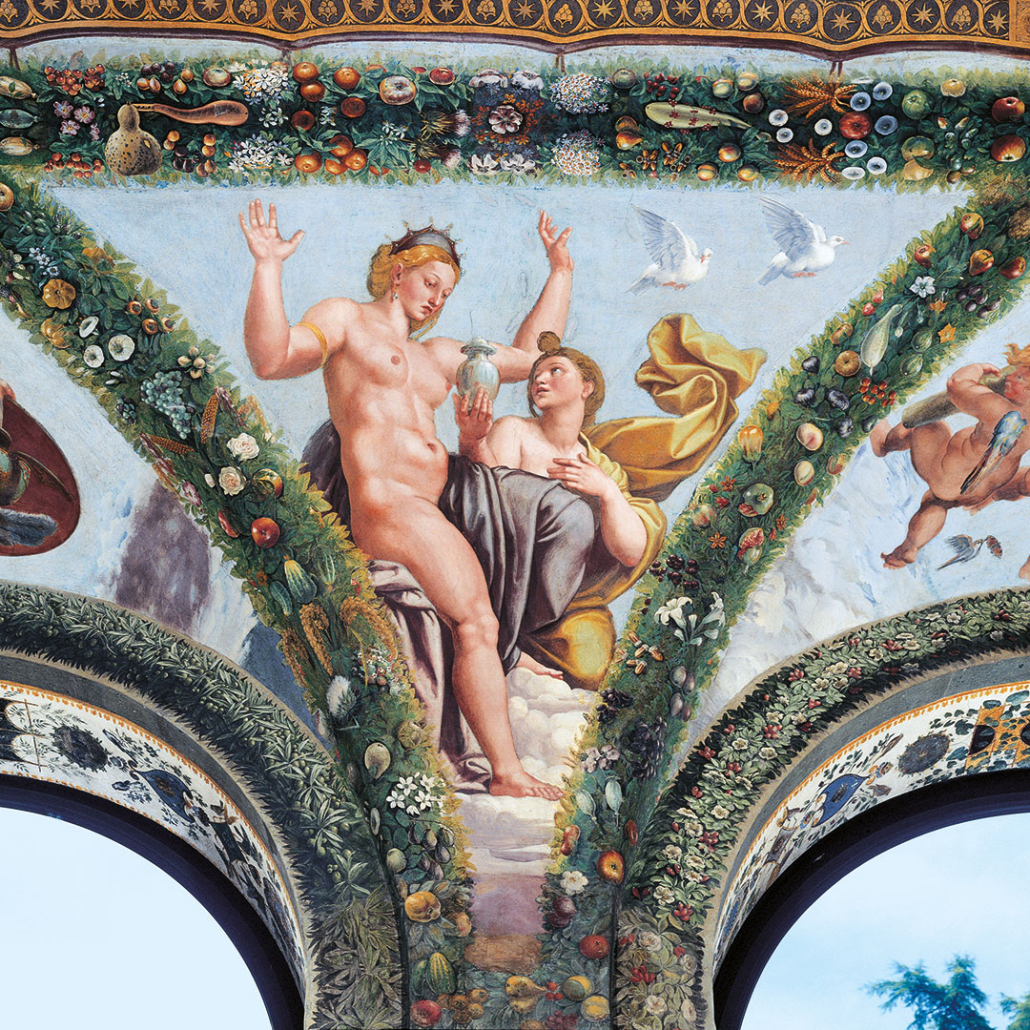
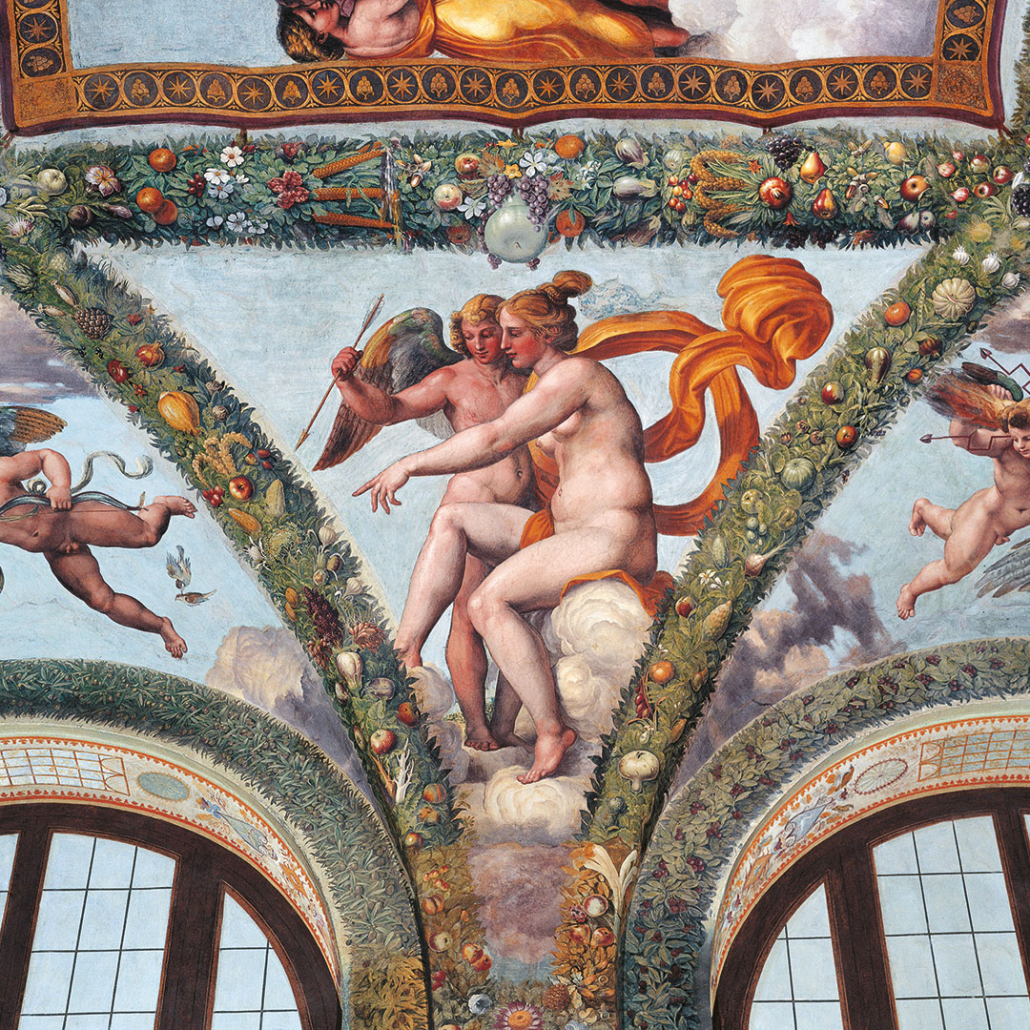
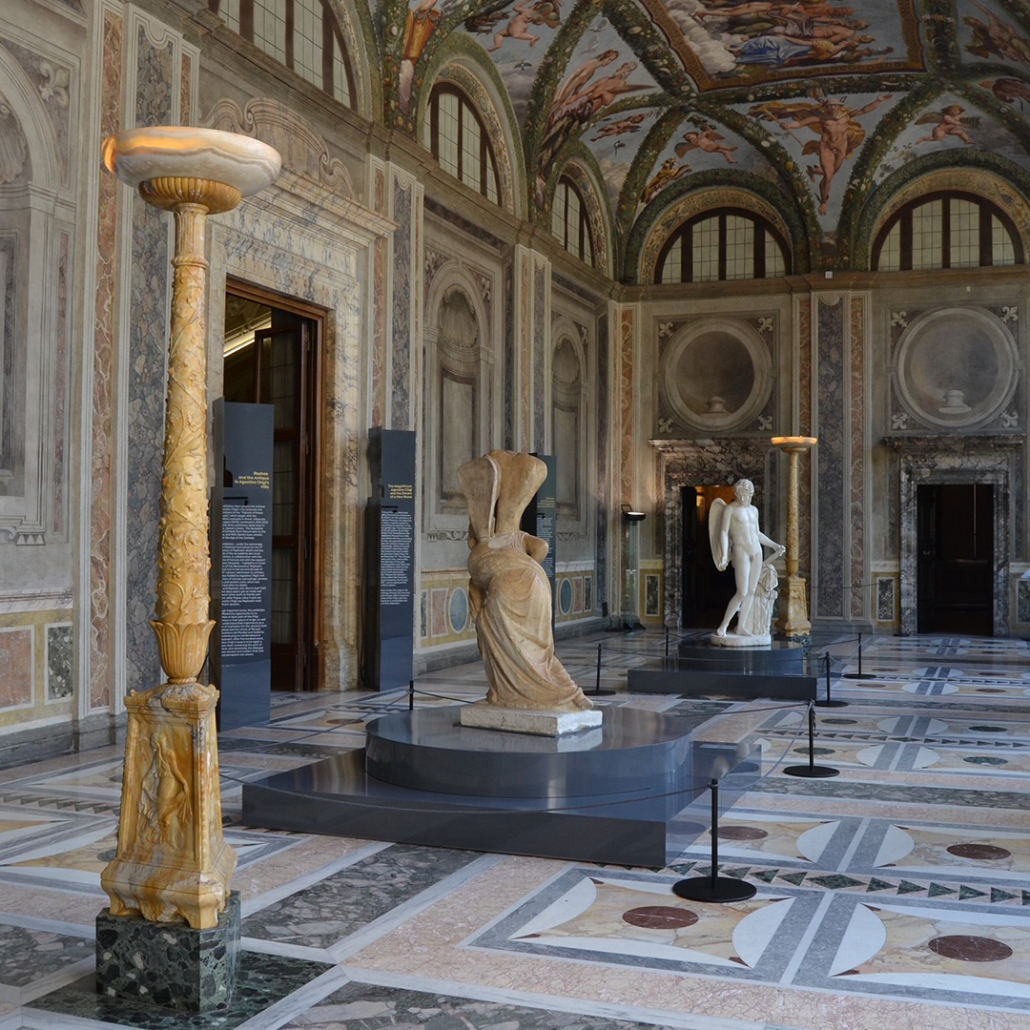
The Loggia, located on the ground floor and consisting of five arches now enclosed by protective glass, takes its name from the fresco decoration painted in 1518 on the vault by Raphael’s workshop from the master’s designs. The scenes depict episodes inspired by Apuleius’s The Golden Ass, specifically the tale of Cupid and Psyche, a theme already used in the fifteenth century for artworks with nuptial subjects.The Loggia served as a stage for the celebrations and theatrical performances organized by the villa’s owner.
To give the space a festive and theatrical character, Raphael transformed the vault of the entrance Loggia into a pergola, as if the garden’s pavilions and trellises extended into the Villa in the form of rich garlands. At the center are two painted tapestries: the sumptuous Banquet of the Gods, in which the maiden, unjustly persecuted, is finally welcomed among the divine assembly, and The Marriage of Cupid and Psyche, the symbolic culmination of the entire cycle.
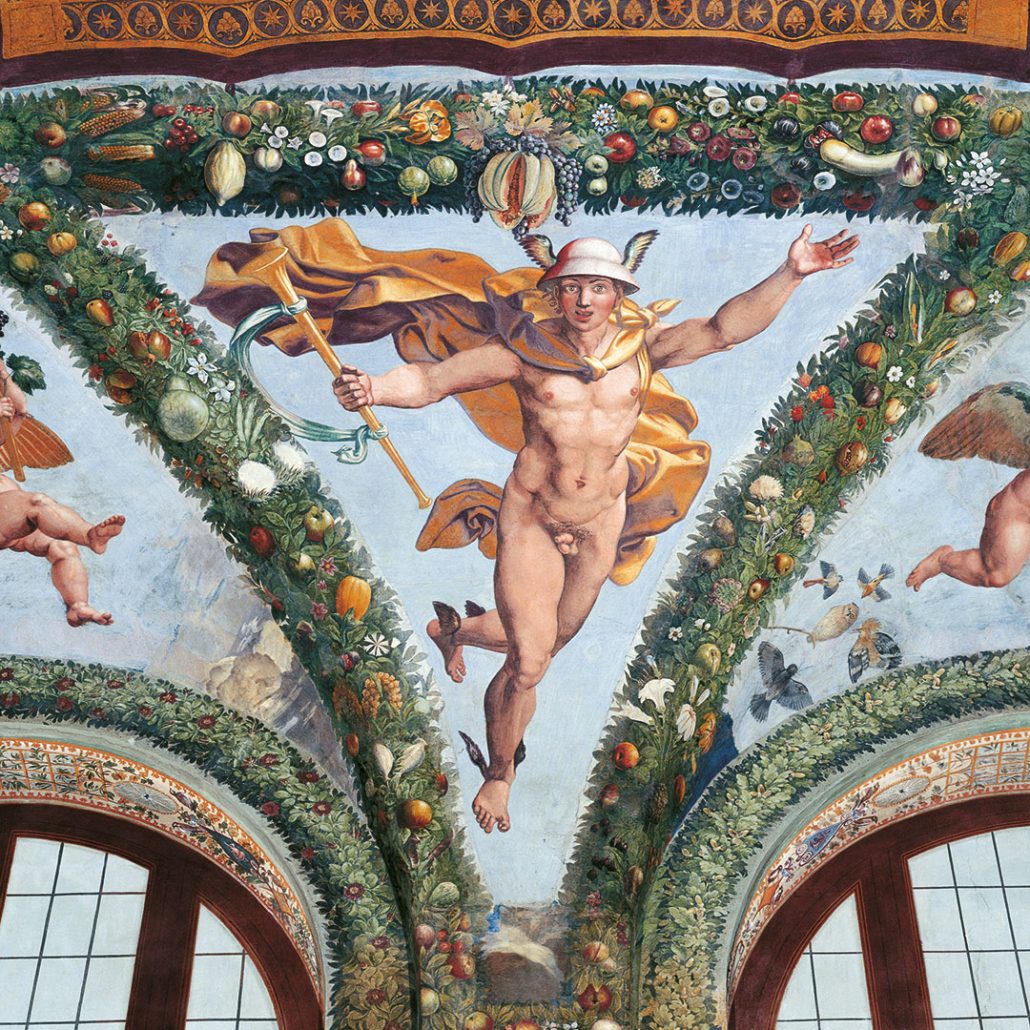
However, it should be remembered that the general layout of the fresco and the conception of the individual scenes and figures are due to Raphael’s ingenious intuition, but numerous artisans from his workshop often worked on the frescoes, including Giovan Francesco Penni, Giulio Romano and Giovanni da Udine, the author, in particular, of the exuberant triumph of the festoons of flowers and fruit.