
The Grotesque Gallery
The term ‘grotesques’ derives from the chance discovery of the famous Domus Aurea.
In fact, around the last quarter of the 15th century, a young Roman fell into a crack in the Oppian Hill and found himself in a cave covered with painted figures: these were the rooms of Nero’s sumptuous palace, built in Rome between the Caelian and Esquiline Hills between 64 and 68 AD.
Soon, young artists of the Renaissance wanted to descend into the rooms to see the paintings for themselves, including Pinturicchio, Michelangelo and Raphael. Thus, and especially after the famous Loggias that Raphael painted in the Vatican between 1517 and 1519, grotesque decoration quickly became a real artistic fashion.
During the 16th century, this imitatio antiquitatis was criticised by Vasari, who described the paintings as “very licentious and ridiculous”.
Grotesques deny space, presenting hybrid and monstrous beings, slender and whimsical figures that blend into geometric and naturalistic decorations on a white or monochrome background.
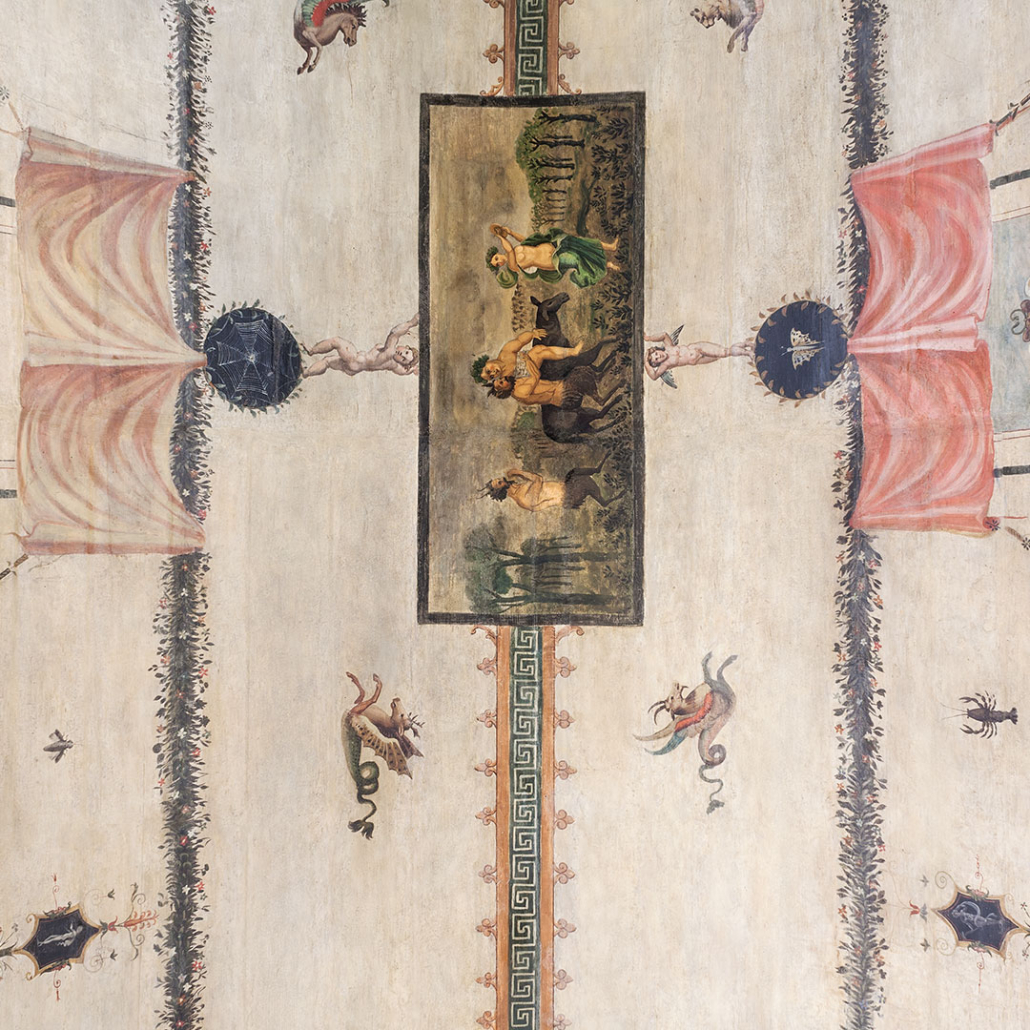
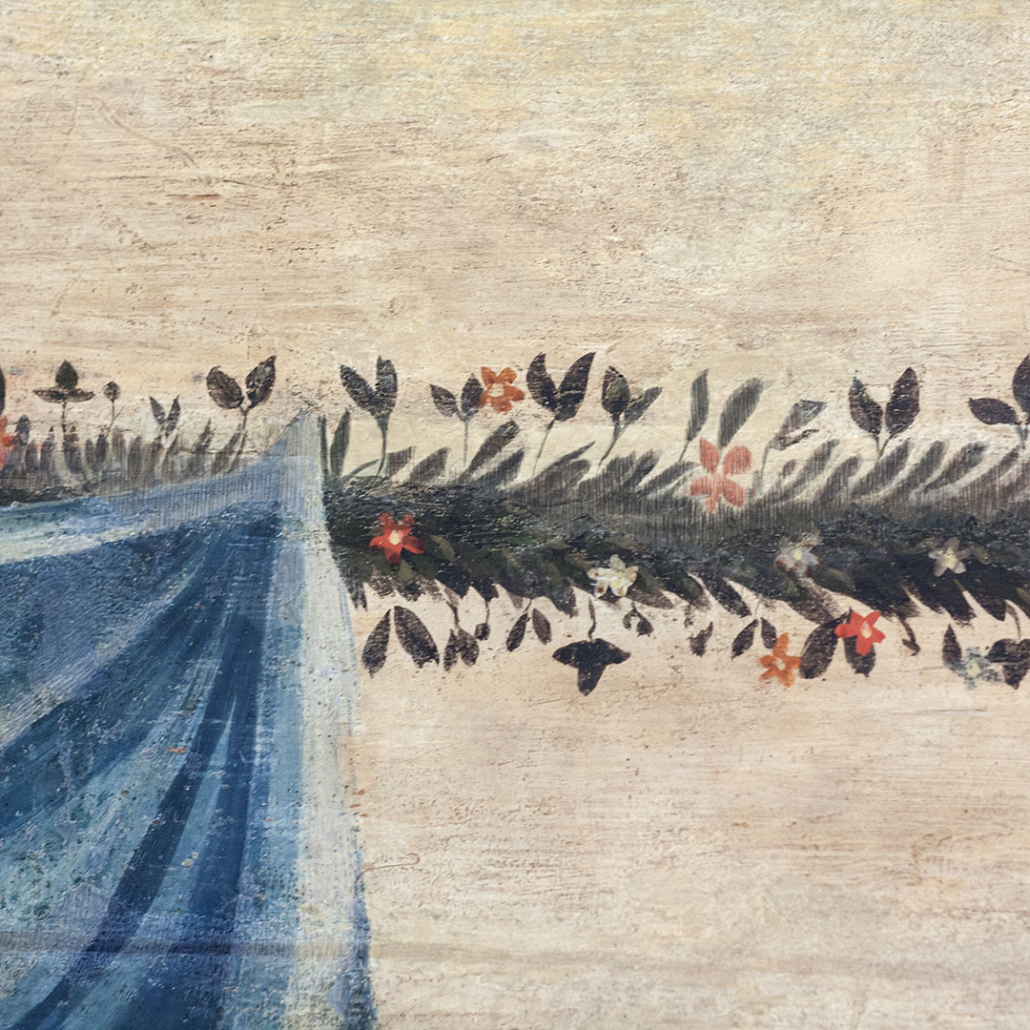
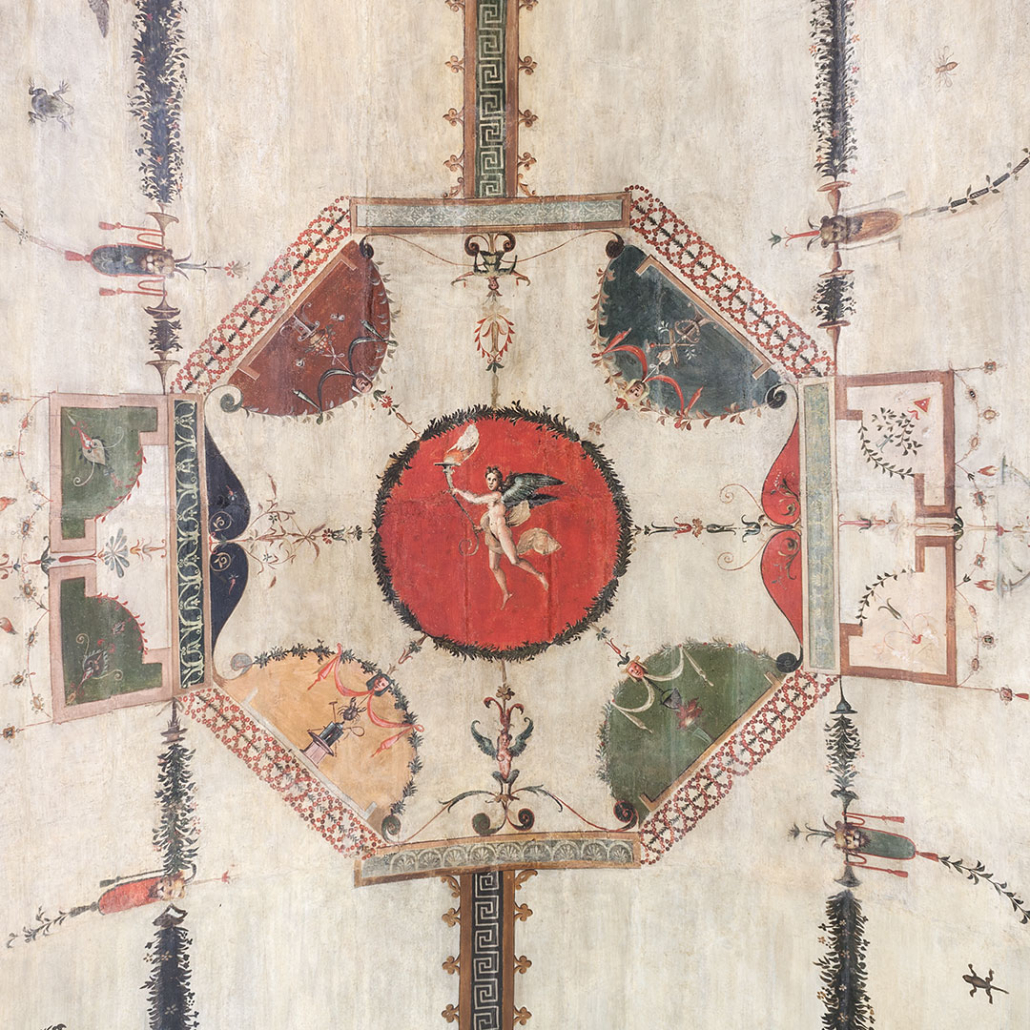
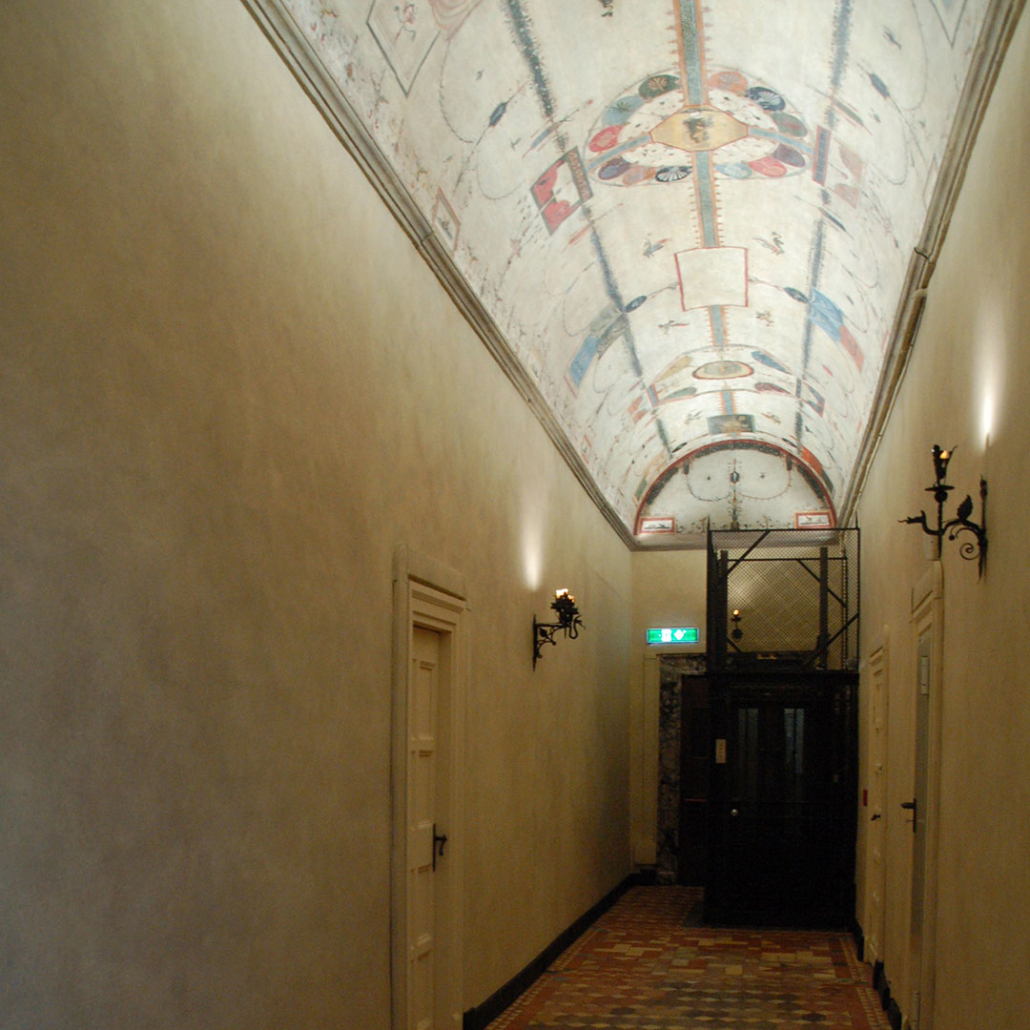
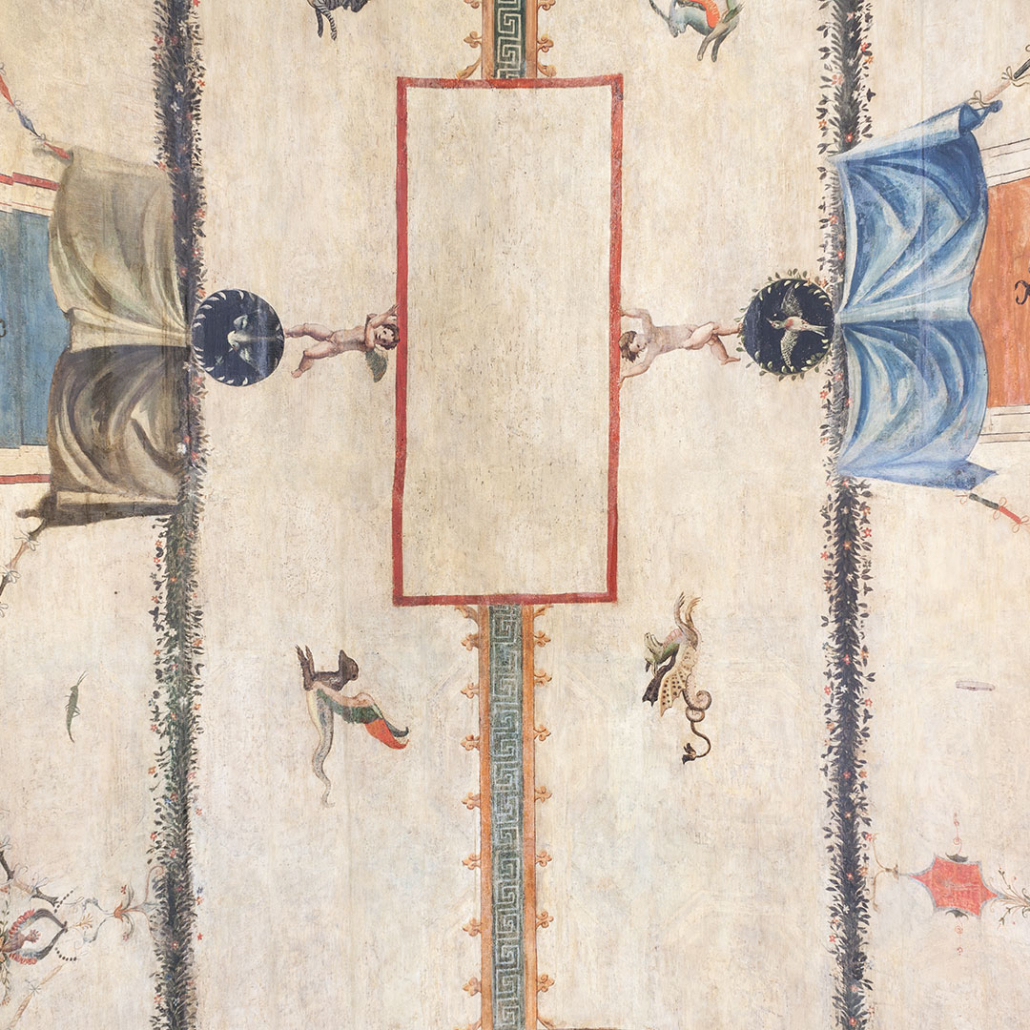
The figures are very colourful and create geometric effects and intertwining patterns without space. Vitruvius, the architectural theorist of the Augustan age, expressed in the seventh book of his treatise De Architectura a strong condemnation of these ornaments, considered “absurd and incoherent”, thus censuring a fashion that was also characteristic of the marvellous Pompeian decorations of the third style and which would later reach its peak in Nero’s Domus Aurea in the middle of the first century AD.
Vitruvius’ teachings were held in high regard by both the architect Baldassarre Peruzzi and his client Agostino Chigi, so it is likely that this is why little space was given to grotesques in the Farnesina.
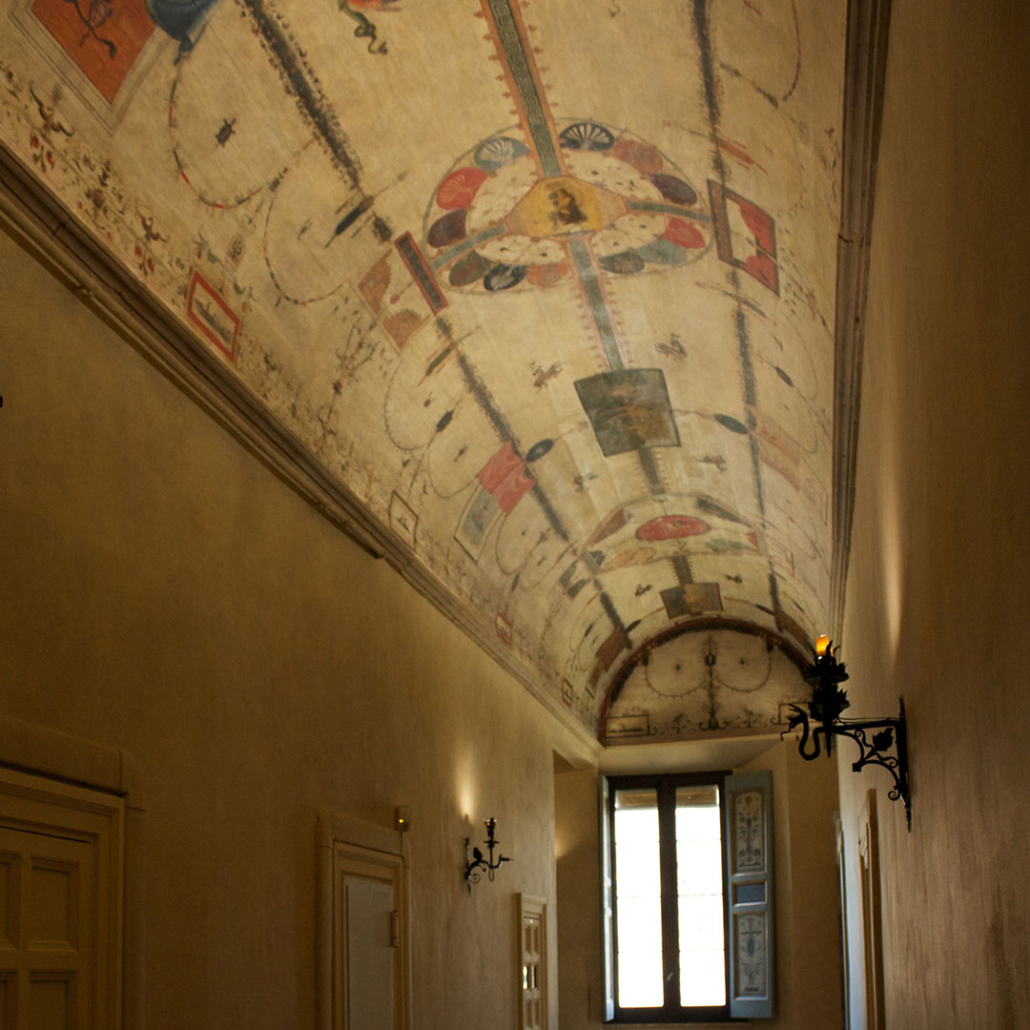
In fact, only a few sober and elegant “candelabra” motifs frame the Triumph of Galatea and punctuate the space between the paintings in the Loggia itself. Much more articulate and fanciful grotesques are those (perhaps the work of Polidoro Caldara da Caravaggio) that adorn, with golds, bright colors, cameos and bucrania, the ceiling of the Alexander and Roxane Room frescoed by Sodoma. Other grotesques, however, are found in this small Gallery. This graceful corridor, which connected the Room of the Perspectives with the rooms of Francesca Ordeaschi and her children, is in fact covered by a wooden barrel vault that, simulating a frescoed masonry roof, is decorated with delicate grotesques on a white background.
Very similar to those that Raphael had reproduced in 1516 in the Loggetta del Cardinale Bibbiena in the Apostolic Palace, they date to the period 1517-1518 and thus to a time shortly after the completion of the paintings in the Sala delle Prospettive. Traces of coffering near the elevator refer to the period when part of the gallery, divided into three distinct sectors, was used as a chapel according to what is documented in a plan from 1560. Most of the decorations date from the restoration of the years 1861-1863 when “grotesque” decorations had a moment of renewed popularity mindful of the discoveries at Herculaneum and Pompeii. The lunettes above the window and above the door leading into the Hall of Perspectives date from interventions in the 1930s.
After an initial educational project carried out by students from the Scuola di Alta Formazione – ISCR (School of Higher Education), the restoration work was carried out by restorers trained at the ISCR school (Consorzio Recro) and funded by the Isabel und Balz Baechi Stiftung in Zurich for the protection of wall paintings.