CERIF

LINCEO RESEARCH CENTRE ON CULTURAL HERITAGE VILLA FARNESINA

Objectives

Study and research on cultural heritage through non-invasive diagnostics, for the understanding, protection and enhancement of the artistic heritage of Villa Farnesina and other similar sites.

Collaborations

The Centre has established a network of collaborations with qualified public and private entities. The following institutions have joined the network:

CNR
ENEA
INGV
INFN-CHNet
UNICAM
MET NY
Bruker Italia srl
CERHER
Museo Nazionale Romano
Parco Archeologico del Colosseo
Palazzo Farnese
Museo Archeologico Nazionale Napoli

Bodies

The Centre’s activities are overseen by a Steering Committee of nine members appointed by the Academy’s Presidential Council. The Committee consists of five members of the Accademia dei Lincei and four representatives of the institutions in the network. The Curator of Villa Farnesina attends the Committee’s meetings

Approval

The regulations of the Lincei Centre for Research on Cultural Heritage Villa Farnesina (CERIF), after approval by the Presidential Council of the Accademia Nazionale dei Lincei, were presented and approved at the Joint Class Meeting on 10 December 2021.

In accordance with the regulations, the Presidential Council appointed the members of the CERIF Executive Council: five members of the Lincei Academy (Carlo Gasparri, Maria Luisa Meneghetti, Gigetta Regoli, Antonio Sgamellotti, Lucia Tomasi Tongiorgi) and four representatives of the institutions that have joined the collaboration network (INGV – President Carlo Doglioni, INFN-CHNet – Director Francesco Taccetti, Colosseum Archaeological Park – Director Alfonsina Russo, University of Camerino – Rector Claudio Pettinari).

At its first meeting on 1 February 2022, the Executive Board unanimously appointed Antonio Sgamellotti, member of the Lincei Academy, as Director of CERIF.
The Statute of CERIF

Regulations of the Linceo Centre for Research on Cultural Heritage Villa Farnesina

The regulations formally define how the Centre operates and is structured. They are divided into articles that establish:

Purposes (Art. 1)
The objective is to conduct research on cultural heritage – in particular Villa Farnesina – with a focus on non-invasive diagnostic techniques and the resilience of the works.
It promotes research projects, conferences, exhibitions, workshops and seminars at national and international level, often in collaboration with other institutions.

Collaborations (Art. 2)
It regulates relations with public and private partners.
These collaborations are based on principles of sustainability and innovation, and may include participation in national and international calls for proposals and funding.
Official agreements are entered into by the Accademia dei Lincei and the Centre is financed through projects and contributions.

Bodies and members (Art. 3)
The Steering Committee is composed of nine members: five Lincei members and four representatives of partner institutions, plus the Curator of Villa Farnesina.
The term of office varies: 4 years for Lincei members, 2 years (renewable) for external representatives.

Operating procedures (Art. 4)
At the first meeting, a Director is elected from among the Lincei Members of the Committee, who coordinates scientific activities.
The Committee meets at least twice a year (at the beginning and end of the academic year) and draws up minutes that are sent to various bodies of the Academy.
External experts may be invited without voting rights.

Research projects and activities (Art. 5)
Projects may be proposed by the Director, the Lincei Members or the Curator of the Villa.
Each year, a scientific report on the activities carried out is drawn up and submitted to the Academy.
At the end of each four-year period, a final report and programme report are also drawn up.
The results may be published in the Academy’s series or in scientific journals.

Headquarters (Art. 6)
The headquarters are located in the Villa Farnesina.
The official acronym is CERIF (CEntro RIcerche villa Farnesina).

Annex A
Detailed list of public and private institutions with which the Centre may enter into collaboration agreements

Cerif Research

Research notebook from 2017 to 2024

The volume Research notebook from 2017 to 2024 brings together publications, conferences and exhibitions related to the research of CERIF (Linceo Centre for Research on Cultural Heritage Villa Farnesina) up to December 2024.

Founded in 2022 at the Accademia Nazionale dei Lincei, CERIF studies cultural heritage using non-invasive diagnostic techniques in order to understand, protect and enhance its artistic heritage. It collaborates with prestigious national and international institutions and promotes scientific and educational events.


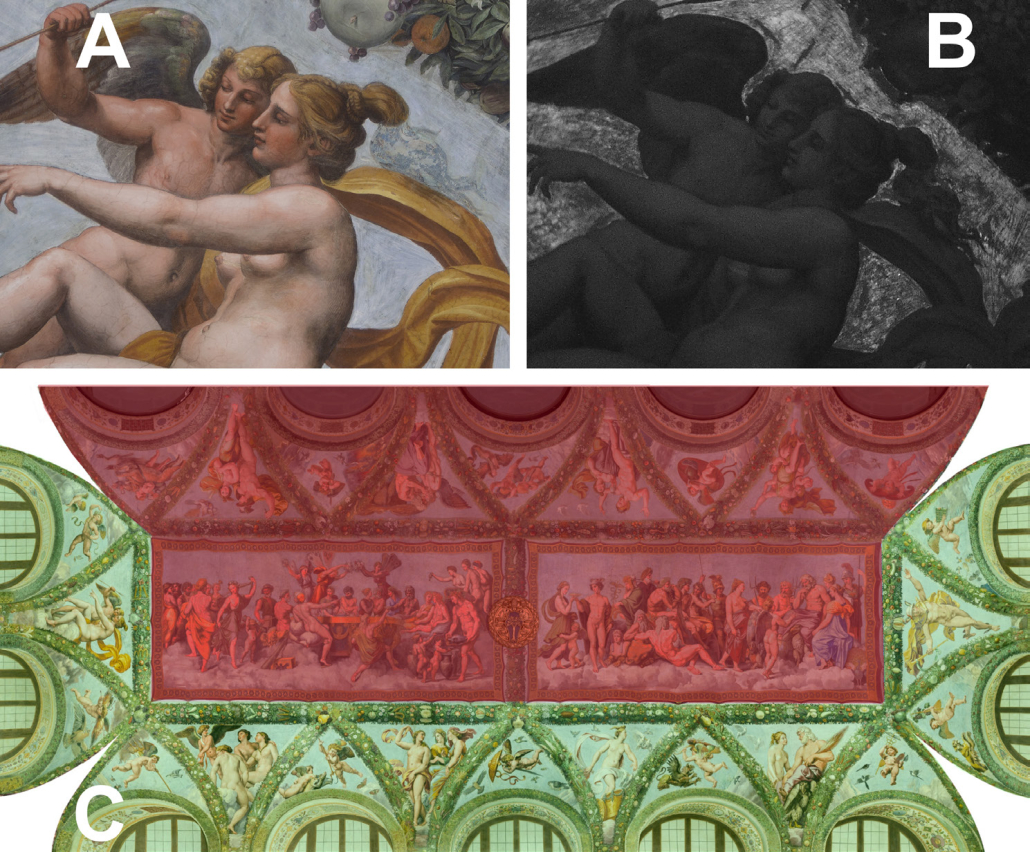
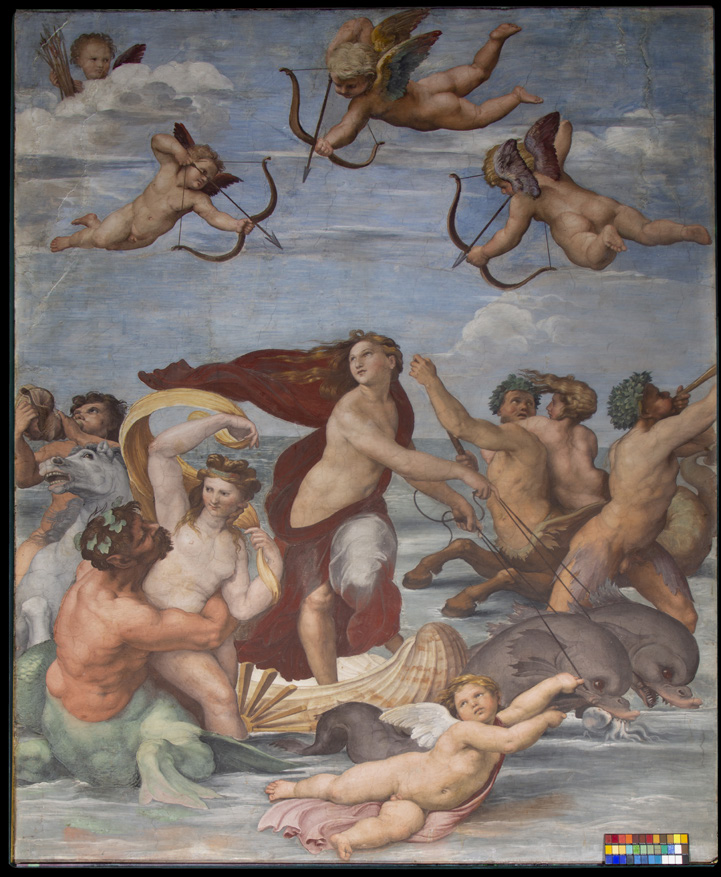
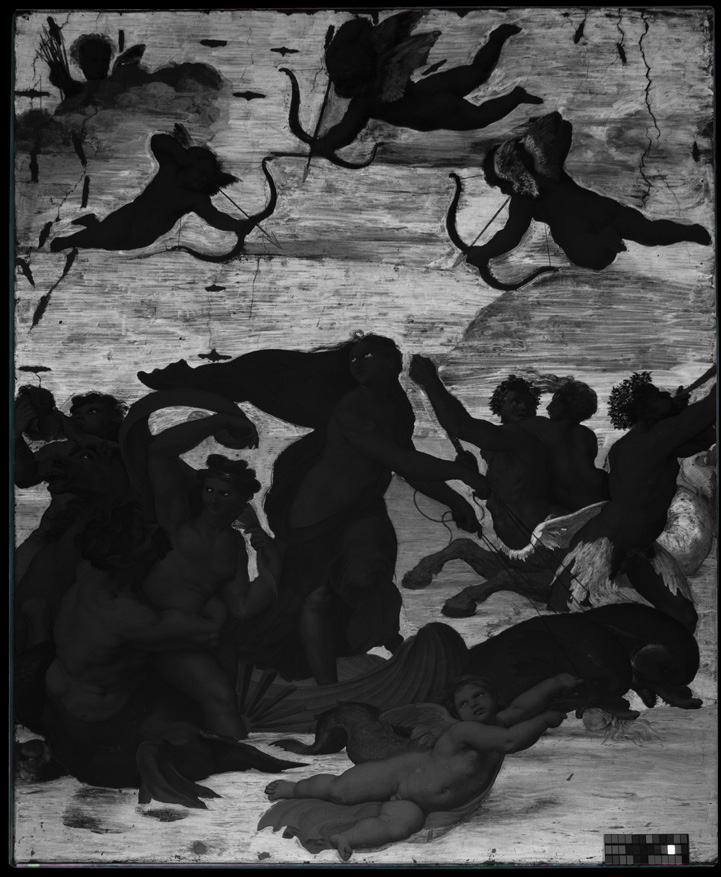
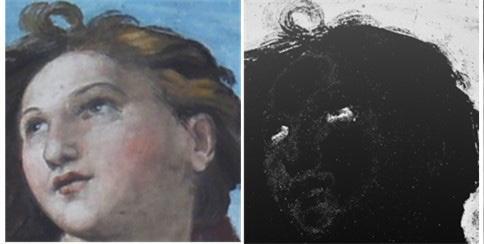
The volume also includes activities prior to the official foundation, considered the start of the journey, which led to significant discoveries such as the early use of Naples Yellow and the unexpected presence of Egyptian Blue in Raphael’s Triumph of Galatea.

These results, the fruit of the synergy between science and art history, still guide research on the Villa Farnesina and other similar sites today.

Bluenet: discovering Egyptian Blue, from the Arts to the Sciences

A journey through art, science and history dedicated to the first artificial pigment in history, from its ancient origins to today’s high-tech applications.

The exhibition explores the versatility and sustainability of Egyptian blue through works by contemporary artists and contributions from international researchers, in an interdisciplinary dialogue that combines beauty and innovation.

BLUENET is the largest international network of academics studying Egyptian blue, the ancient pigment that has spanned millennia of art and science history.
Founded in 2019, BLUENET brings together researchers from various disciplines, including chemistry, physics, archaeology, art history and materials science, united by a common goal of promoting interdisciplinary research on this extraordinary pigment.

The origins of BLUENET lie in a surprising discovery: the identification of Egyptian blue in Raphael’s Triumph of Galatea at Villa Farnesina. This exciting discovery opened up new perspectives and gave rise to the BLUENET project, a joint effort to improve knowledge of the past use of Egyptian blue and promote its applications in the present and future.

CERIF (CEntro linceo di RIcerca sui beni culturali villa Farnesina), an integral part of the Accademia Nazionale dei Lincei and operating from its representative office at Villa Farnesina, is the creator and promoter of the network.

From the outset, this initiative has benefited from the support of distinguished institutions, including the Colosseum Archaeological Park and the Egyptian Museum in Turin.

CERIF

Linceo Research Centre on Cultural Heritage Villa Farnesina

Objectives

Study and research on cultural heritage through non-invasive diagnostics, for the understanding, protection and enhancement of the artistic heritage of Villa Farnesina and other similar sites.

Collaborations

The Centre has established a network of collaborations with qualified public and private entities. The following institutions have joined the network:

CNR
ENEA
INGV
INFN-CHNet
UNICAM
MET NY
Bruker Italia srl
CERHER
Museo Nazionale Romano
Parco Archeologico del Colosseo
Palazzo Farnese
Museo Archeologico Nazionale Napoli

Bodies

The Centre’s activities are overseen by a Steering Committee of nine members appointed by the Academy’s Presidential Council. The Committee consists of five members of the Accademia dei Lincei and four representatives of the institutions in the network. The Curator of Villa Farnesina attends the Committee’s meetings.
The Centre’s acronym is CERIF (CEntro RIcerche villa Farnesina).

Approval

The regulations of the Lincei Centre for Research on Cultural Heritage Villa Farnesina (CERIF), after approval by the Presidential Council of the Accademia Nazionale dei Lincei, were presented and approved at the Joint Class Meeting on 10 December 2021.

In accordance with the regulations, the Presidential Council appointed the members of the CERIF Executive Council: five members of the Lincei Academy (Carlo Gasparri, Maria Luisa Meneghetti, Gigetta Regoli, Antonio Sgamellotti, Lucia Tomasi Tongiorgi) and four representatives of the institutions that have joined the collaboration network (INGV – President Carlo Doglioni, INFN-CHNet – Director Francesco Taccetti, Colosseum Archaeological Park – Director Alfonsina Russo, University of Camerino – Rector Claudio Pettinari).

At its first meeting on 1 February 2022, the Executive Board unanimously appointed Antonio Sgamellotti, member of the Lincei Academy, as Director of CERIF.
The Statute of CERIF

Regulations of the Linceo Centre for Research on Cultural Heritage Villa Farnesina

The regulations formally define how the Centre operates and is structured. They are divided into articles that establish:

Purposes (Art. 1)
The objective is to conduct research on cultural heritage – in particular Villa Farnesina – with a focus on non-invasive diagnostic techniques and the resilience of the works.
It promotes research projects, conferences, exhibitions, workshops and seminars at national and international level, often in collaboration with other institutions.

Collaborations (Art. 2)
It regulates relations with public and private partners.
These collaborations are based on principles of sustainability and innovation, and may include participation in national and international calls for proposals and funding.
Official agreements are entered into by the Accademia dei Lincei and the Centre is financed through projects and contributions.

Bodies and members (Art. 3)
The Steering Committee is composed of nine members: five Lincei members and four representatives of partner institutions, plus the Curator of Villa Farnesina.
The term of office varies: 4 years for Lincei members, 2 years (renewable) for external representatives.

Operating procedures (Art. 4)
At the first meeting, a Director is elected from among the Lincei Members of the Committee, who coordinates scientific activities.
The Committee meets at least twice a year (at the beginning and end of the academic year) and draws up minutes that are sent to various bodies of the Academy.
External experts may be invited without voting rights.

Research projects and activities (Art. 5)
Projects may be proposed by the Director, the Lincei Members or the Curator of the Villa.
Each year, a scientific report on the activities carried out is drawn up and submitted to the Academy.
At the end of each four-year period, a final report and programme report are also drawn up.
The results may be published in the Academy’s series or in scientific journals.

Headquarters (Art. 6)
The headquarters are located in the Villa Farnesina.
The official acronym is CERIF (CEntro RIcerche villa Farnesina).

Annex A
Detailed list of public and private institutions with which the Centre may enter into collaboration agreements

Cerif Research

Research notebook from 2017 to 2024

The volume Research notebook from 2017 to 2024 brings together publications, conferences and exhibitions related to the research of CERIF (Linceo Centre for Research on Cultural Heritage Villa Farnesina) up to December 2024.

Founded in 2022 at the Accademia Nazionale dei Lincei, CERIF studies cultural heritage using non-invasive diagnostic techniques in order to understand, protect and enhance its artistic heritage. It collaborates with prestigious national and international institutions and promotes scientific and educational events.


The volume also includes activities prior to the official foundation, considered the start of the journey, which led to significant discoveries such as the early use of Naples Yellow and the unexpected presence of Egyptian Blue in Raphael’s Triumph of Galatea.

These results, the fruit of the synergy between science and art history, still guide research on the Villa Farnesina and other similar sites today.

Bluenet: discovering Egyptian Blue, from the Arts to the Sciences

A journey through art, science and history dedicated to the first artificial pigment in history, from its ancient origins to today’s high-tech applications.

The exhibition explores the versatility and sustainability of Egyptian blue through works by contemporary artists and contributions from international researchers, in an interdisciplinary dialogue that combines beauty and innovation.

BLUENET is the largest international network of academics studying Egyptian blue, the ancient pigment that has spanned millennia of art and science history.
Founded in 2019, BLUENET brings together researchers from various disciplines, including chemistry, physics, archaeology, art history and materials science, united by a common goal of promoting interdisciplinary research on this extraordinary pigment.

The origins of BLUENET lie in a surprising discovery: the identification of Egyptian blue in Raphael’s Triumph of Galatea at Villa Farnesina. This exciting discovery opened up new perspectives and gave rise to the BLUENET project, a joint effort to improve knowledge of the past use of Egyptian blue and promote its applications in the present and future.

CERIF (CEntro linceo di RIcerca sui beni culturali villa Farnesina), an integral part of the Accademia Nazionale dei Lincei and operating from its representative office at Villa Farnesina, is the creator and promoter of the network.

From the outset, this initiative has benefited from the support of distinguished institutions, including the Colosseum Archaeological Park and the Egyptian Museum in Turin.